One continuity plan around moving day
Build a 48 hour moving essentials kit for a family move
The useful question is not how many things can fit in an essentials box. It is who will hold each critical item, when it is next needed and whether the family can still reach it if the main load, the keys or the people arrive at different times.

At a glance
What this guide helps you organise
- Define the window from the final evening at the old home to the next morning at the new one.
- Separate items that stay on a person from medicine, named day bags and the household opening crate.
- Give every container an owner, custody rule, next use time and replenishment check.
- Keep medicines in their supplied packaging and follow the label or pharmacist for storage.
- Do not rely on the main removal load arriving first or on a mail or healthcare update completing immediately.
Start with time
Define the 48 hour window before choosing an item
A fixed start and finish prevents a small continuity kit from becoming an unlabelled spare room packed into several bags.
Set the start at the final evening before the move and the finish after the first full morning at the destination. That window normally includes sleep at the old address, the last wash and meal there, the moving journey, any wait for authorised access, the first evening at the new address, one night and the next morning. It is not a promise that the main move will take a particular number of hours.
Write the people, addresses and likely handover points at the top of the record. A family may split between a car, public transport, childcare, work or a separate key collection. The kit must still work when the person holding the new keys is not the person travelling with the removal vehicle.
Use one admission rule: an item belongs in this plan only if somebody needs it before ordinary unpacking begins, if losing access to it would create a material problem, or if it restores access to another essential service. Everything else remains part of the normal room inventory. The Packing Services London page explains how agreed household packing fits into the wider move. This article deals only with the small continuity layer that the family controls.
If the normal inventory still includes items that may leave by reuse, donation or recycling, resolve those routes before the list is frozen. The declutter before moving guide shows how to keep each item in the load until its alternative route is confirmed.
Four custody rules
Use four containers instead of one mystery box
Keys, medicines, personal day needs and the first household actions do not share the same risk, so they should not share one vague label.
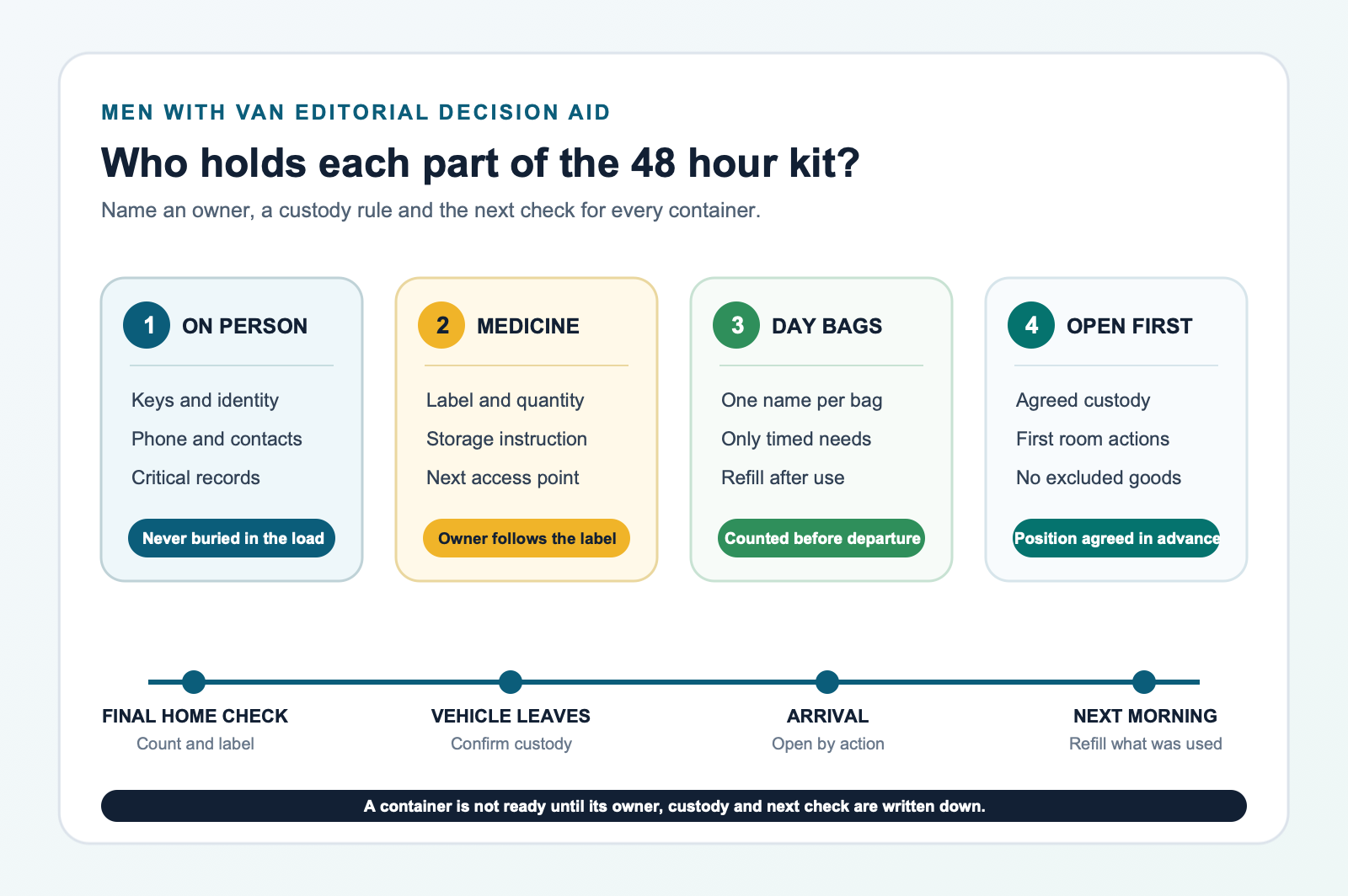
The first container is an on person pouch or secure pocket for the adult responsible for keys, identity, the charged telephone, current contact record and any critical paper that cannot be replaced during the journey. Do not publish door codes or financial details on an outside label. The second is the medicine carrier, owned by the person taking the medicine or a named responsible adult and prepared to the storage instructions on the label.
The third group is a named day bag for each person. Pack only what that person is scheduled to use inside the window, such as a weather layer, the next clothing change, personal wash items, sleep clothing and the power lead matched to a device they actually need. A child or another dependant may need their bag controlled by an adult. This guide does not replace the more detailed health, feeding, safeguarding or travel plan that an individual family may require.
The fourth container is the household opening crate. It supports the first practical actions at the destination, such as making one sleeping area usable, washing hands, drying a wet surface, using the bathroom and safely disposing of ordinary packing waste. Keep it deliberately small. A kettle, full cookware set, complete cleaning cupboard and several days of food turn it back into general unpacking.
| Container | Named owner | Custody rule | Ready test |
|---|---|---|---|
| On person | One named adult | Stays with that person | Keys, contacts and critical records checked |
| Medicine | Patient or responsible adult | Follows the label and agreed storage plan | Quantity and next access point confirmed |
| Day bag | One owner per person | Travels with the person or their responsible adult | Needs listed by time, not by room |
| Opening crate | Household coordinator | Customer held or position agreed before loading | Only first actions and allowed goods included |
Medication boundary
Check medicines before the final packing day
The 48 hour check is a confirmation gate, not enough notice to assume that a repeat prescription, pharmacy collection or special storage problem can be resolved.
The NHS advises requesting a repeat prescription up to five working days before the medicine is needed. At the start of this plan, count what is already available against the prescribed schedule and the realistic period before normal access resumes. If the supply appears insufficient, contact the GP surgery or pharmacy through the route they provide. Do not change a dose, combine medicines or improvise a substitute because the move is close.
Kent Community Health NHS Foundation Trust advises keeping medicines in the containers or original packaging supplied, following the storage instruction on the label and asking a pharmacist when anything is unclear. Some medicines require refrigeration. A generic cool bag is not proof that a specific medicine has remained within its required conditions, so agree the actual method with the pharmacist or clinical team responsible for that medicine.
Record the name on the package, quantity, next scheduled use, storage instruction, owner and the next confirmed place where the medicine can be stored correctly. Keep the carrier secure and out of sight and reach of children. Do not put it into the ordinary box flow. Men With Van's current moving day FAQ says medicines and important personal documents should not normally be placed in the move unless specific arrangements are agreed.
Save the current GP and pharmacy contact routes and the official NHS pharmacy finder. That is a contingency record, not a reason to delay the quantity check. If urgent health advice is needed, use the appropriate NHS service rather than relying on a removals article.
Original custody map
Name an owner and next check for every container
A label such as essentials or open first describes priority but does not say who has the container now, who receives it or when used items are replaced.
Create one row for every container and one line for every time critical item. Record the owner, current location, next use, quantity, storage condition where relevant and the person who will confirm arrival. Use plain status words such as READY, IN USE, REFILL or MISSING. A status changes only after the named person checks the item.
Keep the record short enough to read on a telephone. It can sit in the family's current move message beside the full addresses and contact roles, while sensitive information stays private. The clear booking records guide explains why one current record is safer than several screenshots with different times or instructions.
At the old address, the household coordinator checks the four container names against the record. Before anybody leaves, each owner confirms custody. At destination access, the coordinator checks only that the people and containers have arrived, not every general moving box. After the first evening use, refill or relabel anything needed the next morning.
First room actions
Build the opening crate around actions, not rooms
The crate should make a few defined actions possible even when bedrooms, kitchen boxes and bathroom cartons have not been unpacked.
Write the actions first. A household might need to make one bed, use the toilet and sink, dry a damp entrance, provide drinking vessels, charge a necessary device and contain ordinary packaging. Then select the smallest safe set of items that completes those actions. This produces a much cleaner result than taking one item from every cupboard.
Keep that opening crate separate from the ordinary kitchen load. The kitchen packing and appliance preparation guide covers glasses, plates and appliances that remain in the main inventory; it does not change which items belong in the first-night kit.
Do not place cash, jewellery, deeds, passports, medicines, animals, hazardous material or perishable food into the crate on the assumption that it will travel in the removal vehicle. Men With Van's current terms identify goods that are not normally carried and require advance disclosure for any specific arrangement. Keep personal valuables and medicines under the customer's own custody.
If the opening crate is going in the van, show it to the moving contact before loading and agree how it will be identified. Loading order must still reflect safe handling, the route and the actual load. A bright label does not entitle a customer to move through the loading area or to remove a box while the crew is working.
Use a label with the destination address, the words OPENING CRATE, the household coordinator's name and a short allowed contents list. Do not print an alarm code, spare key location, medicine name or sensitive family detail on the outside.
Five control points
Run the same five checks as the household moves
A timed sequence catches items that have been used, moved to another bag or handed to the wrong person after the kit was first packed.
| Control point | Question | Record |
|---|---|---|
| Final evening | What will be used before sleep or breakfast? | Leave it in use and assign the refill time |
| Before loading | Are excluded and personal goods outside the box flow? | Confirm the on person and medicine owners |
| Before departure | Do keys, contacts, people and containers match the travel plan? | Set each container to READY or MISSING |
| After authorised entry | Which first action can begin without blocking the crew? | Open only the required container in a clear area |
| Before bed | What was used and what is needed next morning? | Set REFILL, replace the item and confirm the owner |
The final evening check matters because a toothbrush, medicine, cable or child's comfort item can move after the bag was first closed. Instead of saying that the kit is done, record whether it is sealed or still in use. The owner closes it only after the final scheduled use at the old property.
At the destination, choose a clear area outside the carrying route. Do not spread personal bags across the entrance, stair, lift lobby or rooms receiving furniture. For the broader household job, review Men With Van's house removals service and share the route, stairs, access, item list and destination rooms before moving day. The small kit should support that plan, not obstruct it.
Separate journeys
Keep the kit usable when London journeys split
Parking controls, building time slots, key release and separate family journeys can change who reaches the destination first without changing what each person needs.
Record who is travelling with the keys, who can authorise entry, who is meeting the removal team and who holds each dependant's day bag. Include both full addresses and a private contact route. Do not assume that a family car can stop beside the removal vehicle or that the person on public transport will arrive before the main load.
If destination entry depends on legal completion or a key holder, use the completion day moving delay record for that decision. If a managed building controls the entrance or lift, use the service lift handover guide. The essentials kit does not grant access to a home, road, loading bay or building.
Keep the kit with its assigned owners during a wait. Do not unload it onto a footway, lobby or communal route simply to find something. The London moving day parking guide can help the customer record the responsible authority, lawful vehicle position and building window for both addresses.
Records, not loose papers
Separate mail and healthcare updates from the physical kit
Address changes matter, but an online application or confirmation record should not be mixed with clothing, bedding or an unsecured bundle of personal documents.
Royal Mail says a home Redirection needs at least five working days to arrange and recommends applying three weeks before the move. At the 48 hour check, confirm the old and new addresses, the names included, the requested start date and the reference already supplied. If the application has not been made, do not assume all mail will follow immediately or place original financial records into a moving box as a workaround.
The NHS says a GP registration will usually be confirmed within five days of the surgery receiving the details, but it may take longer. A person who is changing surgery should follow the NHS process and keep the current care and prescription contacts available during the transition. If the address changes but the person is not changing surgery, the NHS advises telling the current surgery directly.
Put the current move contacts, confirmation references and address update list into a private digital or paper admin record held by one adult. Carry only the identity or original document actually required during the window. Keep passwords, complete payment details and unnecessary copies out of a shared checklist.
Before the quote is finalised, tell Men With Van about the addresses, access, general inventory and agreed packing needs. Use the moving service price guide for the actual quote inputs. The essentials record does not add a service, change the booking or promise a particular loading position.
Sources and checks
Current NHS and Royal Mail guidance checked for this plan
Prescription, medication storage, GP registration and mail services can change. Follow the current label, pharmacist, healthcare provider and official service instructions for the real household.
- NHS: how to order a repeat prescriptionChecked 29 July 2026
- Kent Community Health NHS Foundation Trust: how to store medicationChecked 29 July 2026
- NHS: register with a GP surgeryChecked 29 July 2026
- NHS: find pharmacy servicesChecked 29 July 2026
- Royal Mail: Redirection help when moving homeChecked 29 July 2026
Common questions
Questions about a family moving essentials kit
Is a 48 hour moving kit supposed to be one box?
No. Use separate custody for on person items, medicines, each named day bag and the household opening crate because they have different owners, storage needs and access rules.
Should the essentials kit travel in the removal van?
Keep keys, important personal records, medicines and irreplaceable valuables with the customer. Discuss any opening crate with Men With Van before loading and do not assume excluded goods can be carried.
How much prescription medicine should I pack?
Follow the prescribed schedule and count the supply through the realistic next access point. If it appears insufficient, contact the GP surgery or pharmacy rather than changing a dose or guessing.
What if a medicine needs refrigeration?
Follow the specific label and ask the pharmacist or clinical team about the correct moving and storage method. A generic cold container does not prove suitability for every medicine.
What goes in each person's day bag?
List only what that person is scheduled to use before ordinary unpacking begins, then name the owner and refill time. Health, feeding, mobility and safeguarding needs require their own responsible plan.
Can Men With Van pack the family essentials kit?
Agreed household packing can be included in a pack and move booking, but the customer should retain control of personal documents, medicines, valuables and any goods outside the agreed service.
Keep the continuity layer separate
Share the main move details while the family keeps named custody of essentials.
Give Men With Van the full addresses, inventory, access, packing scope and any agreed opening crate. Keep keys, medicines, personal records and valuables under the customer's own named control.