Close the kitchen without losing control
Packing glasses, plates and kitchen appliances for moving
Treat the kitchen as a sequence of releases, not one pile of boxes. Keep daily use, fragile packing, cold food and appliance preparation on separate tracks until each is ready.
At a glance
What this guide helps you organise
- Give every kitchen item one current state: still in use, ready to pack, first open, appliance hold or not moving.
- Seal glasses and plates into small traceable handling units, then test the closed box for movement without shaking it hard.
- Keep every large appliance on hold until the exact model instructions, connection boundary, empty state and route are confirmed.
- Plan chilled and frozen food separately from the removal load and check current Food Standards Agency advice.
- Send the final kitchen brief before moving day, including fragile box counts, appliance models, access and any work that still needs a qualified technician.
Five states, one owner
Set the kitchen release board before a box is sealed
A kitchen becomes difficult when cups still in use, packed crockery, cold food and disconnected appliances share one vague status.
Start with one board that names the person responsible for closing the kitchen. List cupboards, drawers, worktop appliances, large appliances, pantry goods and the first items needed at the destination. Give each group one current state: USE, PACK READY, FIRST OPEN, APPLIANCE HOLD or NOT MOVING. Do not put an item into two states at once.
USE covers the minimum equipment needed until the kitchen closes. PACK READY means clean, dry and no longer required before departure. FIRST OPEN is a small customer controlled set for commissioning the destination kitchen. APPLIANCE HOLD means the exact model, manual, connection, empty state, route and transport preparation are not all confirmed. NOT MOVING needs a separate accepted destination or lawful route rather than a place beside the removal boxes.
Write a closing trigger for each group. For example, everyday mugs move from USE to PACK READY after the final drink and wash. A washing machine stays on APPLIANCE HOLD until the last cycle is complete, the drum is empty, the current manual has been checked and the agreed person has dealt with its connections. The board should show who changes the state and when.
This method keeps the article distinct from the broader Packing and Moving Services London page. That service page explains what an agreed pack and move booking may include. The release board tells the customer what is ready, what remains live and which items cannot yet enter the packing scope.
| State | Meaning | Release evidence |
|---|---|---|
| USE | Needed before the kitchen closes | Named final use and wash time |
| PACK READY | Clean, dry and ready for a handling unit | Count and destination confirmed |
| FIRST OPEN | Controlled by the moving contact | Destination use and custodian named |
| APPLIANCE HOLD | One preparation fact is still missing | Exact manual and connection plan complete |
| NOT MOVING | Outside the removal inventory | Separate destination or route confirmed |
Keep one safe working area
Protect the final use lane and separate cold food
Packing can continue around one clearly bounded working lane, but food, cleaning products and loose packing materials should not compete for the same surface.
Choose one clear worktop area for the items still in use and one separate dry area for items that are ready to pack. Keep tape, blades, loose paper and empty cartons away from cooking and food preparation. Do not build stacks in front of an exit, appliance switch, water control or route used to carry completed boxes.
Plan chilled and frozen food as its own decision. The Food Standards Agency says domestic fridges should operate between 0 and 5 degrees Celsius and freezers at about minus 18 degrees Celsius. It also advises keeping chilled food out of refrigeration for the shortest possible time. Those figures are food safety guidance, not permission to place perishables in an ordinary removal box.
The current Men With Van FAQ identifies perishables as goods that should not normally enter the van unless a specific arrangement has been agreed. Decide what will be consumed, given an appropriate separate route or transported under a suitable temperature plan controlled by the customer. Record the container, temperature check, departure time, destination refrigeration and decision owner.
The official power cut guidance gives time estimates for a closed fridge or freezer during an outage, but it also says performance varies by make, model, room temperature and door opening. Do not convert those estimates into a universal moving allowance. A switched off appliance that is being emptied, moved through warm access and opened is not the same controlled situation.
Final use lane check
- Only the minimum cups, plates, utensils and one preparation method remain in use.
- Cold food has a separate named plan and does not enter a crockery box.
- Cleaning products stay closed and separate from food and tableware.
- The exit, floor and appliance controls remain clear.
- The closing person knows which item moves next and which item stays on hold.
Traceable before decorative
Build a handling unit that explains itself
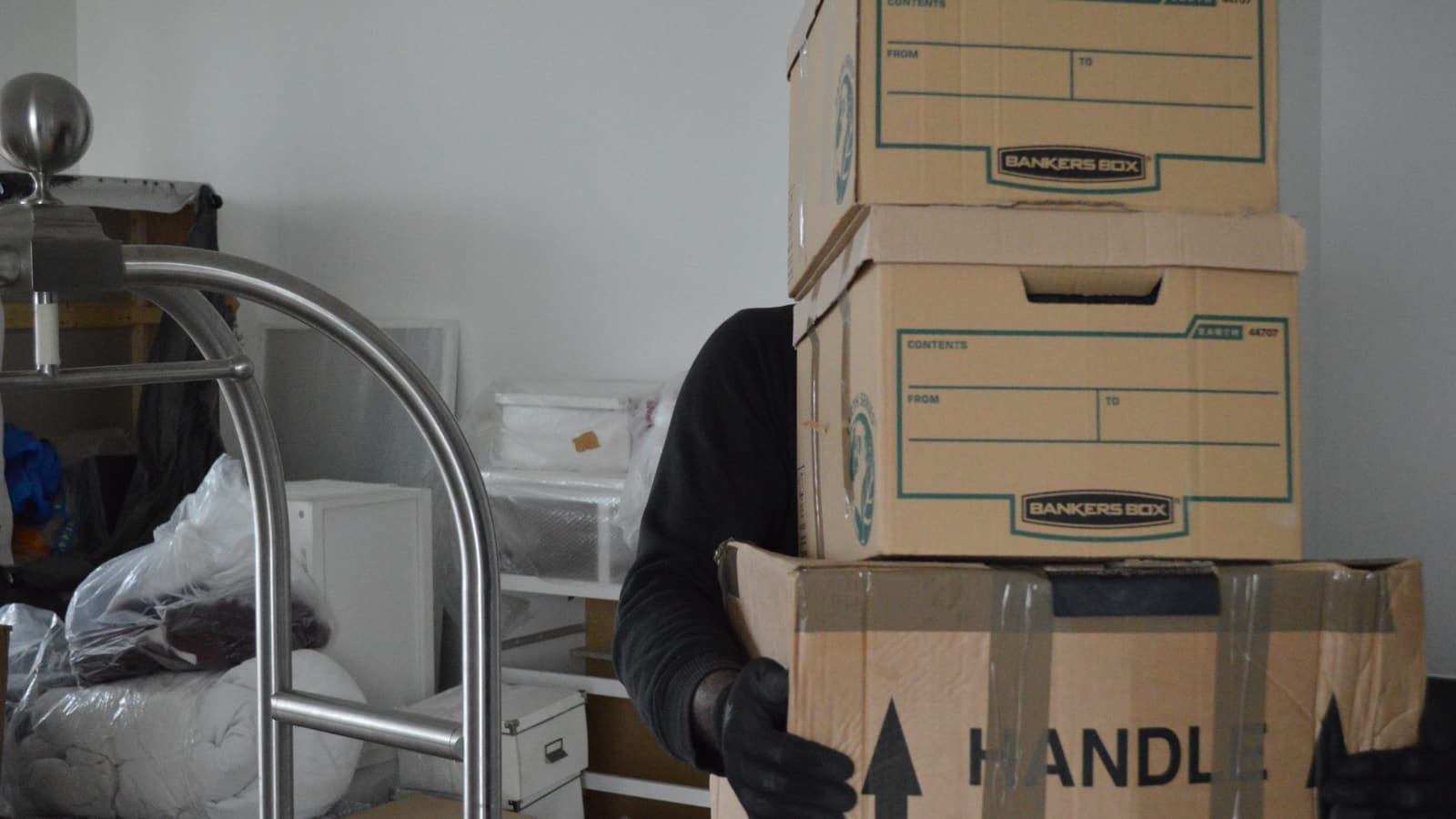
A useful kitchen box tells the next handler what it contains, how it is oriented, where it belongs and whether the contents have been checked.
Give each box a short identifier such as K01, K02 and K03. Record the identifier on the release board before sealing. Add the source cupboard, destination cupboard, broad content type, packer initials, closure time and one opening priority. Keep personal details and item values in the private record rather than writing them on the outside.
Choose a carton that closes squarely and remains suitable for lifting after the contents are added. Reinforce the base before loading, create a level cushioning layer and keep each finished unit compact enough to control through the actual route. There is no universal safe box weight. HSE guidance asks the responsible operator to consider the nature of the job, the object, the surroundings and the person handling it, including grip, posture, carrying distance, floor and available equipment.
Separate weight from fragility. A small carton can still be awkward if the load shifts or the handholds tear. A light carton can still damage its contents if it has a large empty space. After the unit is closed, lift one edge only far enough to feel whether the load moves. If it moves, reopen and correct the internal support. Do not shake a box of glass to test it.
Mark only instructions the packing method can support. FRAGILE identifies a handling concern, but it is not a substitute for internal protection. THIS SIDE UP is useful only when the contents were arranged for that orientation. FIRST OPEN should appear only on the one unit controlled by the moving contact. The clear booking records guide provides a wider method for keeping current item and route records separate from old versions.
Control contact and movement
Pack glasses and plates as separate protected cells
The aim is to stop hard surfaces meeting, prevent loose movement and keep rims, stems and plate edges away from direct box pressure.
Inspect each item in good light before wrapping. Put chipped, cracked or already unstable pieces on hold and decide whether they are moving. Record pre existing damage when the item matters. Remove dust or grit, then make sure the piece is dry. Moisture trapped inside a sealed handling unit can damage labels and weaken some packing materials.
For plates and shallow bowls, form a cushioned row with each wrapped piece standing on its edge rather than making one heavy flat column. Keep pieces from touching and support both ends of the row so it cannot lean when the carton changes direction. Put denser pieces lower within the controlled unit, but do not create a load that presses directly on a plate edge.
For tumblers and cups, protect the body and rim, then place each piece in its own divider space or cushioned cell. A stemmed glass needs support around the bowl and a separate soft build around the stem so the next item cannot press against it. Do not fill a hollow glass with a hard object. Lids, stoppers and removable parts should have their own wrapped position and a matching identifier.
Close one layer before building another. Use a firm divider or cushioning layer that keeps the upper group from resting directly on the lower group. Finish with a full top layer so the contents cannot rise into the flaps. Seal the box, run the gentle edge test and record the final count. A handwritten count helps the customer check the unit at the destination without relying on memory.
Use the protected goods guide for the wider journey, loading and property care plan. Careful packing reduces avoidable contact, but it does not guarantee that fragile goods cannot break. Tell the company about unusually delicate, high value, irreplaceable or already damaged pieces before the booking is fixed.
Exact model before generic advice
Prepare small appliances with a model and parts record
A kettle, blender, coffee machine or mixer is not ready because it fits in a box; heat, liquid, blades, detachable parts and maker instructions still need decisions.
Write the maker, model and serial record before packing, then locate the current instruction manual. Take a condition photograph and list the parts that belong with the appliance. The record matters when two similar cables, jugs, blades or bases are packed at the same time.
Switch the appliance off through its normal control and unplug it only when it is safe and accessible. Let any heated part cool completely. Empty food, grounds, capsules, crumbs, water and removable reservoirs as the manual directs. Clean and dry the appliance without forcing water into a motor base, connector or control. If a part remains wet or hot, return the item to APPLIANCE HOLD.
Fit any maker supplied transport piece, blade guard or locking position. Wrap sharp or moving parts separately and place them in a named inner container. Secure the cord using the method allowed by the manual, without pulling it tight around a fragile plug or control. Do not put a loose glass jug, metal blade and motor base into one unstructured space.
Original packaging can help when it is complete, sound and actually belongs to that model. It is not proof of safe preparation by itself. If using another carton, support the appliance body and prevent attachments from striking it. Mark the unit with the model record and destination position, then include it on the final kitchen brief.
If a small appliance has a fixed gas, water or electrical connection, stop treating it as an ordinary worktop item. Men With Van's current packing and preparation terms state that disconnection or reconnection of gas, fixed electrical or plumbing services is outside the normal scope unless confirmed in writing. Arrange the appropriate competent person and keep the appliance on hold until the boundary is clear.
Manual, connection, route, restart
Release each large appliance on its own evidence card
Fridges, freezers, washing machines and dishwashers need separate cards because transport hardware, water, doors, orientation and restart instructions vary by model.
Create one card for each appliance. Record the exact model, dimensions, current position, destination position, door and handle projection, route measurements, removable parts, connection type, responsible technician where needed, transport hardware, required orientation and restart instruction. Attach photographs of the appliance and its route, not private documents or passwords.
Defrost and dry before release
Keep a fridge or freezer on APPLIANCE HOLD until the current instructions for the exact make and model have been checked. Move food into its separate temperature-controlled plan, then follow the maker's switch-off and defrost procedure where that model requires one. Do not copy a lead time from another appliance.
Contain meltwater and leave the internal surfaces, door seals, drains, trays and removable shelves or drawers clean and dry before release. Record the completion date and any remaining water, ice, odour, damage or missing part on the appliance card.
If defrosting, drying, connection, transport orientation or restart evidence is incomplete, keep the appliance on hold and tell the removal company what remains unresolved before booking or loading.
For a washing machine, the current Bosch moving guide is a useful example of why the model manual matters. It tells owners to empty the drum, deal with remaining hose water and use transit bolts for transport. That is Bosch guidance, not a universal instruction for every machine. Find and follow the maker's current procedure for the exact appliance.
For a fridge or freezer, empty the cabinet and secure removable shelves or drawers according to its manual. Samsung's current installation guidance says the model can differ, the cabinet should be empty and level, and the cord should be secured using the fitted holder where provided. Bosch publishes a separate fridge freezer moving guide with its own orientation and restart advice. Do not borrow a waiting time or door removal method from another make or model.
Keep a plumbed fridge, dishwasher or washing machine on APPLIANCE HOLD until the agreed person has isolated, disconnected and drained it safely. Record any caps, transit pieces, hoses and fixings. Protect the floor and keep the route clear. If an appliance needs to be lifted over an obstacle, tilted beyond its instructions, dismantled, hoisted or passed through an uncertain opening, ask for a written assessment instead of improvising.
At the destination, compare the live position with the card before unloading into the final place. Reconnection, levelling, ventilation gaps, water tests and restart timing follow the exact manual and competent installation route. A delivery to the kitchen does not mean the appliance is commissioned or safe to use.
Commission before ordinary unpacking
Control the first open crate and destination kitchen check
The first open crate is a small commissioning unit, not a second kitchen inventory or a reason to open fragile boxes before the room is ready.
Choose a lidded unit that stays with the moving contact. Include only what is needed to check the room and prepare a simple first drink or meal once water, power and surfaces are available. A practical set might include one mug and plate per person, basic cutlery, a dry cloth, bottle opener, paper towels and sealed shelf stable items chosen for the household. Keep cleaning chemicals in a separate closed container.
Do not seal this unit until the final kitchen sweep. Record its custodian and destination position. Medicines, passports, jewellery, payment cards and other personal essentials remain with the responsible person under the wider 48 hour moving essentials plan; they should not disappear into a kitchen crate.
At the destination, first check the floor, worktops, cupboards, sockets, water controls and appliance positions. Photograph any existing damage that affects the handover. Confirm that appliance work still on hold is clearly marked. Only then place the first open unit on a stable surface and release ordinary kitchen boxes in their planned order.
Open one handling unit at a time and compare its identifier and count with the board. Put packing material into a controlled collection point so loose paper and cartons do not block the route. If packing material or unwanted items will leave the property, the removals and house-clearance waste guide helps separate possessions, reuse items and waste before a route is chosen. If glass is broken, stop opening the unit, keep people away and use a safe clean up method suited to the material. Preserve photographs and packaging if a damage report may be needed.
The practical next step
Send the stable kitchen brief before moving day
The removal team needs the final box count, appliance state, route and packing scope, while food safety and technical connections remain with their responsible people.
Send the addresses, kitchen box count, first and last box identifiers, fragile handling units, large appliance list, exact models, dimensions, estimated weight where known, condition concerns, stairs, lifts, door widths, carrying distance, parking, destination positions and any technician appointment. State which items are packed by the customer and which are requested within an agreed packing service.
For House Removals London, add the kitchen group to the wider room inventory and route plan. Do not assume that an appliance, cold food container or unsealed fragile box is accepted merely because it appears in a walkthrough. Ask for any unusual work or unresolved item to be reviewed in writing.
Use the quote inputs and van estimate guide to include the real inventory, crew, route, access and booked time. A neat kitchen may still contain a heavy appliance or a long carry, while many light boxes may still need time. This guide does not promise a van count, job duration, price or damage free outcome.
The next step is to close the release board with the responsible people. Confirm that every handling unit is sealed and counted, each appliance card has passed or remains visibly on hold, cold food has its own plan, and the first open crate has a custodian. Then send the stable brief through the quote or booking route before the crew arrives.
Sources and checks
Current handling and food safety guidance checked for this article
Food temperatures, appliance designs and maker instructions vary. Recheck the exact appliance manual and current official guidance before packing, disconnection, transport, installation or restart.
- HSE: assess manual handling that cannot be avoidedChecked 7 August 2026
- HSE: manual handling questions and the absence of one safe weightChecked 7 August 2026
- Food Standards Agency: chill, freeze and defrost food safelyChecked 7 August 2026
- Food Standards Agency: food safety during loss of refrigerationChecked 7 August 2026
Common questions
Questions about kitchen packing and appliance preparation
Should plates be packed flat or on their edge for moving?
A workable removal packing method is to wrap each plate and stand it on its edge inside a cushioned, supported row so pieces cannot touch or lean. Use a suitable carton, separate layers and correct internal support. This reduces avoidable pressure, but no orientation guarantees that fragile items cannot break.
Can glasses and mugs go in the same moving box?
They can share a handling unit only when each piece has its own protected cell, the rims and handles cannot meet, the weight remains controllable and the closed box passes the gentle movement check. Stemware or unusually delicate pieces may need a separate divided unit or specialist assessment.
Will Men With Van disconnect my washing machine or cooker?
Do not assume that disconnection or reconnection is included. Current Men With Van terms exclude gas, fixed electrical and plumbing work unless it is confirmed in writing. State every connection before booking and arrange an appropriate competent person where the agreed removal scope does not include that work.
How long should a fridge freezer stand before it is switched on?
Use the current instructions for the exact make, model and transport orientation. Waiting times differ, and a rule copied from another appliance may be wrong. Record the manual instruction on the appliance card, keep the cabinet on hold after delivery and switch it on only after the stated conditions are met.
Can chilled or frozen food travel in the removal van?
Men With Van does not normally carry perishables unless a specific arrangement is agreed. Make a separate food safety plan using current Food Standards Agency guidance, suitable temperature control, a named custodian and working refrigeration at the destination. Do not use an ordinary sealed crockery box for chilled or frozen food.
Close the release board
Send the sealed box count and appliance states before moving day.
Share the kitchen handling units, fragile counts, appliance models, access, packing scope and unresolved connections. Keep cold food and technical work with their named responsible people.