Office removals in London planned around your business.
Move desks, chairs, monitors, filing, boxed stock and suitable office equipment with a clear plan for inventory, access, loading, timing and destination handover.
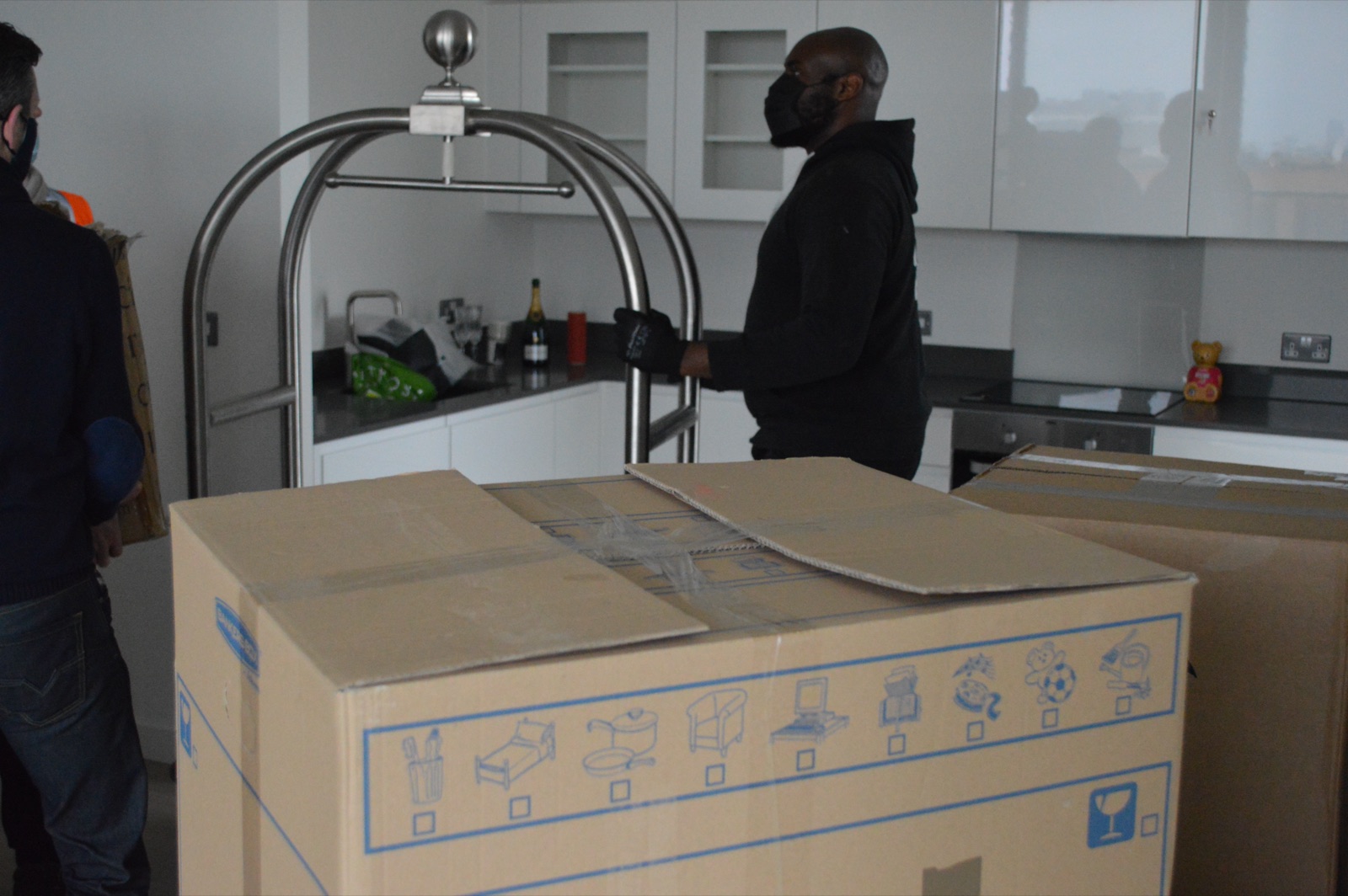
A Men With Van crew moving boxed contents with the route kept clear.
Plan the whole move
An office move starts with the working day, not just the mileage.
A business relocation affects staff, clients, suppliers, building managers and IT support. A useful plan identifies what can leave first, what must remain available, who can approve decisions and when each building will allow the crew to load.
Men With Van can quote for small and medium office moves, internal relocations, office storage transfers, boxed archive moves, suitable equipment moves and routes with several business stops. The quote is based on the information supplied, so a complete inventory and accurate access notes matter.
For a storage-linked office move, use the storage inventory and retrieval plan to number handling units, record unit access and keep priority items reachable before the loading sequence is agreed.
InventoryItems, dimensions and special handling notes recorded before pricing.AccessLifts, loading areas, parking and building rules checked early.SequencePriority items and destination zones agreed before loading.CoverageLondon moves, surrounding areas and longer UK business routes.
Insurance boundary
Read the cover limits and conditions before booking.
Current business arrangements include goods in transit cover up to £50,000 and public liability cover up to £1 million.
These are maximum policy limits, not guaranteed payments. The live policy wording, exclusions, conditions, excesses and insurer decision still apply.
List desks, chairs, monitors, printers, cabinets, boxes, stock and awkward pieces. Add dimensions, photographs and approximate weight for anything unusual so the crew and vehicle estimate is realistic.
Route
Addresses and extra stops
Supply every collection, delivery and storage address in the correct order. Include opening times, key collection, reception contacts and any deadline at the final destination.
Access
Floors and carrying distance
Record floor levels, lift size, stairs, corridors, door widths, the proposed vehicle position and the distance from the loading point to each entrance.
Timing
Building windows and downtime
Confirm when both buildings permit access, when lifts are reserved and which departments must remain operational. Share any fixed handover or reopening time.
Preparation
Packing and dismantling
Identify what will be packed by your team, what packing support is requested and which suitable desks or tables may need dismantling. Share assembly instructions where available.
Responsibility
Named coordinators
Nominate one authorised contact at each address and identify the separate IT, security, storage or building teams whose decisions affect the move.
Move sequence
Plan from the first desk to the final handover.
1. Freeze the move inventory
Agree the item list and mark anything staying behind. Late additions can change volume, timing and the loading order, so record changes through one coordinator.
2. Map both buildings
Walk the route from the proposed vehicle position to the office. Check service entrances, lifts, doorways, stairs, protected surfaces and areas that staff or visitors will still use.
3. Label by destination
Give each desk, box and equipment group a destination floor, room or zone. Keep the same labels on any separated parts, cables and fixings.
4. Set the loading sequence
Load according to the delivery plan, not simply the nearest item. Separate the contents needed first at the destination and keep anything that must remain operational out of the loading zone.
5. Confirm receipt
At delivery, the authorised contact checks destination zones, records any exception and confirms which packed contents have been handed over.
Building management
Confirm the loading area and service lift before moving day.
Ask each building manager for the approved vehicle position, service entrance, lift booking process, access hours, floor protection rules and named contact. A lift reservation is only useful when its dimensions, weight limit and route to the loading point suit the inventory.
The Health and Safety Executive says loading areas should have enough space for vehicles and people to move safely, with people who are not involved kept away. Its loading guidance also says the area should be clear of unrelated traffic and pedestrians, on firm and level ground, and that arrangements should be agreed in advance when more than one company is involved. Review the current HSE loading area guidance and HSE loading guidance with your own responsible person.
Keep the route charge decision in its own record. The road user charge checklist compares the travel date, road time, actual route and assigned registration. It does not approve the building loading area or replace the parking evidence above.
Safe preparation
Manual handling decisions belong in the business move plan.
The Health and Safety Executive says employers must protect workers from hazardous manual handling. Its current approach is to avoid hazardous handling where reasonably practicable, assess risks that cannot be avoided and reduce the risk of injury as far as reasonably practicable.
Your responsible person should identify heavy, unstable, sharp, fragile or difficult items before the quote. Share known weights, dimensions, handling instructions and any manufacturer guidance. Keep the carrying route clear, separate staff from the loading activity and do not ask anyone to move an item that has not been assessed for the available people, equipment and route.
Read the current HSE manual handling guidance. Men With Van uses the inventory and access details to assess a normal removal job, but the customer remains responsible for its own workplace duties and any specialist risk advice.
Records and devices
Keep data control with the customer and its authorised teams.
IT
Back up and disconnect
Your IT provider should back up data, remove access credentials where appropriate, shut down equipment, disconnect it and prepare it for transport. Reconnection, network work and technical installation are not included unless separately agreed.
Custody
Number sensitive containers
Use sealed, numbered containers for confidential records and keep a matching inventory. Name the people permitted to release and receive them, then record any exception at handover.
Scope
Separate specialist equipment
Standard packed desktops, monitors and small office devices can be described in the quote. Server racks, specialist machinery and unusually heavy or sensitive systems require separate assessment and may need a specialist provider.
The Information Commissioner's Office audit guidance says the whereabouts of physical records should be known, movement should be logged and off site transport or storage should be secure. Its guidance is currently under review, so check the latest ICO records movement guidance and apply the controls chosen by your organisation.
Continuity plan
Use phases when the business cannot stop at once.
Phase one: prepare the destination
Confirm access, room labels, network readiness, furniture positions and the first items required by the receiving team.
Phase two: move nonessential contents
Transfer archives, spare furniture, stock and equipment that can leave without interrupting daily work.
Phase three: move priority workstations
Use a defined shutdown time and keep each labelled set together. Your IT team controls data, disconnection and reconnection.
Phase four: verify and close
Check destination zones, compare sensitive container numbers, record exceptions and confirm whether anything remains at the former office.
Book the business move
Get a clear office removal quote from the real job details.
Enter the route, extra stops, inventory, stairs, lift access, loading details, packing needs and preferred timing. Add photographs and notes for anything unusual so the team can assess the move before confirmation.
What details are needed for an office removal quote?
Provide both addresses, floor levels, lift and loading details, the item inventory, preferred timing, extra stops, storage plans, packing needs and any furniture that may need dismantling.
How is the size of an office move estimated?
The estimate uses the item list, dimensions of unusual pieces, access conditions, route, number of movers and realistic loading time. The online van estimator is a planning aid, so the final quote still depends on accurate job details.
Can an office move take place outside normal working hours?
Share the preferred date and access window when requesting the quote. Availability, building rules, parking controls and any reception or lift booking must all be confirmed before the move.
Can you move an office to or from storage?
Yes. Office contents, boxed records, furniture and suitable equipment can be moved to or from storage when the unit address, opening times, access instructions and inventory are supplied.
Can office furniture be dismantled and reassembled?
Suitable desks, tables and practical office furniture can be dismantled and reassembled where agreed, access allows it and the item is safe to handle that way. Share photographs and instructions before booking.
Do you disconnect computers or move server racks?
The customer or their IT provider should back up data, remove credentials, disconnect and reconnect equipment. Packed desktop equipment and monitors can be quoted, while server racks, specialist machinery and unusually heavy equipment require separate assessment and may be outside the service scope.
How should confidential records be prepared?
The customer remains responsible for deciding who may access records. Use sealed, numbered containers, keep an inventory, nominate authorised contacts and record the handover and receipt of sensitive contents.
How can a business reduce downtime during a move?
Confirm access early, label by destination, separate priority equipment, agree the loading sequence, keep decision makers available and move in phases where the inventory and building timetable make that practical.