London kerbside decision guide
Can a removal van load here? Red routes and yellow lines explained
Use the line, kerb marks, bay legend, upright sign and live time together to decide whether an exact stopping point is suitable for genuine loading.
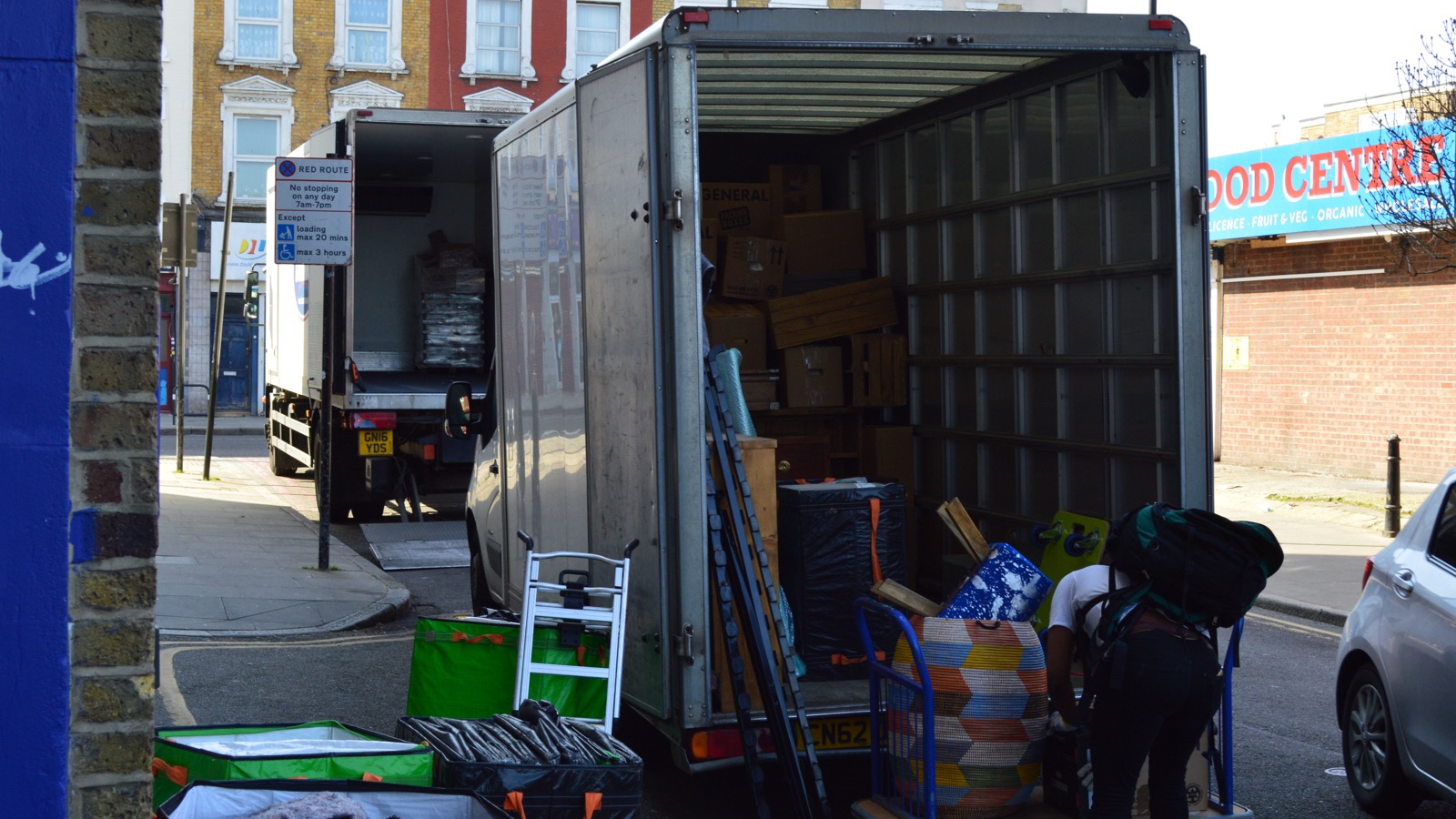
At a glance
What this guide helps you organise
- Check the exact van position because a sign or bay a few metres away may control a different part of the road.
- Read the road line, kerb marks, bay legend, upright sign and current time as one set of instructions.
- Treat red route bays and yellow line loading as conditional, never as automatic permission.
- Use the bay only for genuine loading, with the goods ready and the vehicle moved when the operation is complete.
- Create one short evidence card for pickup and another for delivery, then recheck both places on arrival.
Start at the kerb
Check the exact stopping point, not just the street name
London restrictions can change within a short stretch of road, so the evidence must match the place where the removal van would actually stand.
Begin with a photograph from across the road that shows the proposed van position, the kerb and the nearest upright sign in one frame. Then take a close photograph of the sign and another of any kerb marks or words painted inside the bay. Record the direction of travel, the intended date and the expected loading time. A postcode or a map pin alone cannot show which side of a junction, bay boundary or sign applies.
Identify who manages the road before asking about a bay, suspension or penalty. TfL says it manages most roads with painted red lines, but a small number are managed by local authorities; roads with yellow lines, pay-and-display controls, parking meters or residents' bays are managed by the relevant London borough. Use TfL's red route map or the borough's official parking page to confirm the authority for the exact stopping point rather than relying on line colour alone.
If the sign cannot be read, the bay boundary is unclear or the proposed position falls between two different controls, classify the location as unclear. Do not fill the gap with a guess based on a nearby vehicle. Questions about reserving space, suspensions or dispensations belong in the broader London moving day parking guide. The source checked suspension notice index compares published application periods across all 33 London authorities. The source checked removal parking fee index keeps one day public costs and unresolved source conflicts visible. Neither index approves a bay. This guide is only for interpreting the controls at one exact stopping point.
Use one reading order
Read five pieces of evidence before deciding
The road line is only the first clue. A reliable decision combines the markings under the van with the sign beside that section of kerb.
| Evidence | Question to answer | Why it matters |
|---|---|---|
| Road-edge line | Is it red, yellow or absent? | It identifies the main stopping or waiting control. |
| Kerb marks | Are there one or two short yellow marks on the kerb? | They can add a loading ban to a yellow-line restriction. |
| Bay boundary | Is the van fully inside a marked bay, and what words appear inside it? | A bay can have its own permitted use. |
| Upright sign | Who may use the space, on which days, at what times and for how long? | The plate supplies conditions that paint alone cannot show. |
| Live condition | Is there a suspension notice, temporary sign or obstruction today? | A normally available bay may be unavailable when the move happens. |
Read all five at pickup and repeat the process at delivery. If one item contradicts another, stop the decision there and ask the responsible authority. A photograph is useful evidence, but it does not create permission or make an unsafe position acceptable.
Red means no stopping first
Treat a red route as no stopping unless the bay says otherwise
On a red route, the safe starting assumption is that stopping is prohibited and that loading is possible only where the markings and sign expressly allow it.
Transport for London explains that double red lines operate at all times and do not need a time plate. A single red line has operating times shown on a nearby sign. A red route clearway can prohibit stopping without red lines, apart from marked bays, so an apparently unpainted kerb is not enough evidence on its own.
Where loading is allowed, use the marked bay and read its upright sign. The Highway Code describes red-bordered bays as generally available only for the purpose shown during part of the day and white-bordered red route bays as generally available through the day, but the sign still controls the actual use, hours and maximum stay. Colour is a clue, not permission. The proposed van position must sit within the correct bay rather than on the adjoining red line.
Do not infer that a red route loading bay applies to the next vehicle, doorway or stretch of kerb. Match the bay boundary and sign to the exact stopping point.
Waiting and loading differ
Separate yellow-line waiting rules from yellow kerb loading bans
A single or double yellow line restricts waiting, but loading may still be allowed when no separate loading ban, obstruction or other prohibition applies.
The Highway Code road-marking guide says double yellow lines mean no waiting at any time, while the operating times for a single yellow line come from a nearby plate or a controlled parking zone entry sign. That does not mean every yellow line is a removal loading place. Look next for short yellow kerb marks and their plate.
One kerb mark means loading is prohibited during the times shown. Two kerb marks indicate no loading at any time, with the relevant sign information. London Councils guidance also says the vehicle must not cause an obstruction. Never publish or rely on one universal loading allowance for London: limits and conditions vary by location, and the sign or local control for that exact section wins.
The plate sets the conditions
Let the loading bay sign decide who, when and how long
A marked loading bay is not a general waiting space, and the words on the road never replace the conditions shown on the upright sign.
A white bay marked Loading Only may be available to all vehicles that are genuinely loading, or the sign may reserve it for goods vehicles. The plate can also set operating days, time windows, maximum stay and a no-return period. Some bays change purpose during the day, so a space used for loading in the morning may be reserved for another class of user later. Read every panel before the rear doors are opened.
Do not assume a vehicle qualifies for a restricted bay merely because it looks like a van. If the sign is limited to goods vehicles and the classification is uncertain, check the vehicle record or ask the authority. Stay fully inside the bay, keep doors and handling equipment from creating an obstruction and move as soon as the loading operation is finished. The Department for Transport sign guide includes examples of loading bays whose permitted use changes by time.

Loading must be the purpose
Test whether the stop is genuinely for loading
Even where the place and time allow loading, the exemption is for moving goods to or from the vehicle, not for using the space while other tasks are completed.
TfL loading guidance says the goods should be ready when the vehicle enters the bay and that the vehicle should leave when loading is complete. The operation can include the time reasonably needed to carry goods between the premises and vehicle and to check essential paperwork. It should not become waiting for keys, packing loose belongings, shopping, taking a break or collecting passengers.
When keys depend on legal completion or an authorised release, the completion day key release record keeps that decision separate from kerbside permission. It does not create a right to wait in the bay.
Prepare evidence that explains the purpose without pretending it grants permission. Useful records include the moving booking, pickup and delivery addresses, a dated item list, the bay photographs and any written approval. Activity may not be visible at the vehicle every second while items are carried inside, so the evidence should make the genuine operation clear. For a Man and Van London service, send the loading position and carrying distance with the item and access details before the move.
Make the outcome explicit
Classify the location as permitted, unclear or unsuitable
A simple three-result decision prevents an uncertain sign from being treated as a yes and gives the moving team a clear instruction for each address.
| Result | Use it when | Next action |
|---|---|---|
| Permitted at the stated time | The line, kerb marks, bay and sign allow the vehicle and genuine loading during the planned window, with no suspension or obstruction visible. | Record the evidence, have the goods ready and stay within the stated conditions. |
| Unclear | A sign is missing or unreadable, the bay boundary is uncertain, controls conflict, or a temporary notice changes the normal arrangement. | Ask TfL, the borough or the site manager, or choose another confirmed lawful position. |
| Not a lawful stopping plan | The position is on an operating red line, under an active loading ban, in a restricted or suspended bay, on a clearway, or would create an obstruction. | Do not stop there. Use a lawful alternative or arrange formal permission in advance. |
The result applies only to the recorded position and time. It does not guarantee that the bay will be empty, that traffic conditions will be unchanged or that an enforcement authority will accept an incomplete reading. When the answer depends on permission rather than existing controls, return to the suspension and dispensation process before moving day.
Give the crew one usable record
Create a kerbside evidence card for each address
A short, consistent record is easier to check on moving morning than a folder of unrelated screenshots, map pins and council web pages.
Make one card for pickup and another for delivery. Title each card with the full address and label the proposed side of the road. Include the date and planned loading window, a wide location photograph, a close sign photograph, the line colour, any kerb marks, the bay wording, every relevant sign panel and any temporary notice. Add the authority or site-manager contact and the reference for any written permission.
- Exact frontage, side of road and direction of travel
- Wide photograph showing bay boundaries and nearby junctions
- Close photographs of the upright sign and kerb marks
- Planned arrival time compared with the signed operating hours
- Current suspension, temporary restriction or building notice
- Confirmed lawful fallback position if the first place cannot be used
Send both cards to the London removal company planning contact before travel. The evidence helps the team compare the live street with the plan, but the driver must still follow the signs and conditions found on arrival.
The live street has the final say
Recheck on arrival and switch plans when conditions change
A photograph taken earlier cannot show a new suspension, roadworks, temporary traffic order, blocked bay or damaged sign on moving morning.
Before stopping, compare the evidence card with the live line, kerb, bay and sign. Check that the time window has started, the vehicle category is permitted and the bay is not suspended. Do not block a pedestrian crossing, school entrance marking, bus stop, taxi rank, cycle facility, dropped kerb or pavement. The Highway Code also prohibits leaving a vehicle in a dangerous position or where it causes unnecessary obstruction.
If the controls have changed or the bay cannot be used safely, move on rather than improvising on a red line or loading ban. Contact the responsible authority when the meaning is unclear and tell Men With Van that the carrying distance or timing has changed. The Men With Van parking and access FAQ and moving-day terms explain the customer responsibility for arranging suitable parking and access unless something different is agreed in writing.
Once both evidence cards are ready, include them with the addresses, item list, floors, stairs and access notes in the online quote. That gives the team a practical next step without treating this article as permission to stop.
Sources and checks
Official guidance used for this article
Rules, application times and charges can change. Check the road signs and the responsible authority again before moving day.
- Transport for London: loading for the publicChecked 29 July 2026
- Transport for London: red lines and no stoppingChecked 29 July 2026
- London Councils: loading and unloadingChecked 29 July 2026
- GOV.UK Highway Code: waiting and parking rules 238 to 252Checked 29 July 2026
- Department for Transport: on-street parking signs and road markingsChecked 29 July 2026
Common questions
Moving day planning questions
Do double yellow lines rule out removal loading?
Not automatically. A genuine loading operation may be allowed where no separate loading ban, sign, clearway or obstruction prevents it, but the lines do not reserve a space. Check the kerb marks, plates and exact local control before stopping.
What is the difference between a yellow line and yellow kerb marks?
A yellow line along the edge of the road controls waiting. One or two short yellow marks across the kerb indicate loading restrictions, with the nearby plate or the double-mark rule supplying the relevant times.
Can a removal van stop on double red lines to load?
No. TfL states that double red lines prohibit stopping at all times. Loading on a red route must use a separately marked and signed place where the vehicle, purpose and time are expressly permitted.
Does Loading Only mean the crew can wait in the bay?
No. The bay is for genuine movement of goods to or from the vehicle under the conditions on the sign. Goods should be ready, and the vehicle should leave when the loading operation is complete.
Is twenty or forty minutes always allowed for loading in London?
No. London guidance describes different limits in different places. The exact bay sign, road control and authority instructions decide the permitted time, so a general London allowance should never replace the live sign.
What photographs should I send before moving day?
Send one wide image showing the proposed van position, bay boundaries and nearest junction, plus close images of the sign, kerb marks, road words and any temporary notice. Include the date, time and side of road.
Plan the real move
Share the route, access and move details before the van sets off.
Include every address, floor level, lift, loading distance, parking arrangement, item volume and building time slot so the quote and move plan reflect the actual job.