Inventory
Count desks, chairs, monitors, filing cabinets, storage boxes, printers, kitchen items and any awkward equipment.
Office removals
A business move needs timing, communication and careful handling. This guide explains how to plan a small office relocation with less disruption.
Business continuity
Desks, chairs, monitors, filing cabinets, kitchen items, boxed stock and storage items all need a clear plan. The difference between a stressful office move and a controlled one is usually preparation: inventory, labels, access, timing and communication.
Men With Van can support local London office moves, storage transfers, light commercial relocations and UK routes from London where business items need careful Luton van transport.
Planning checklist
Count desks, chairs, monitors, filing cabinets, storage boxes, printers, kitchen items and any awkward equipment.
Use labels for departments, desks, rooms or floor numbers so unloading stays organised at the new site.
Disconnect screens, cables and small devices before the move. Keep essential equipment separate where needed.
Confirm lifts, loading bays, concierge rules, parking and building move-in slots before the moving team arrives.
Choose arrival windows that reduce disruption, especially when staff, customers or building access times are involved.
For moves beyond London, confirm delivery times, destination access and whether the route needs one van or multiple vans.
One business-owned control record
Use one short register to show who owns each decision, what is ready, where each asset or crate goes and who accepts the handover at every move stage.
Acceptance stages: collection-ready, loaded, delivered-to-zone, IT-released and business-operational. Record any exception before the next stage is accepted.
Men With Van transports only released, labelled equipment within the agreed removal scope. We do not access data or systems, disconnect or reconnect IT, or perform functional testing.
Keep the affected asset, crate, record, device or move stage visibly on HOLD while ownership, custody, IT release, access or acceptance is unresolved.
This register supports planning and handovers only. It does not guarantee business continuity, cybersecurity, confidentiality, regulatory compliance, insurance cover or prevention of damage or loss.
Equipment handling
Office moves often include awkward shapes rather than only boxes. Desks may need dismantling, screens need sensible protection, and cabinets or storage items must be moved in a way that keeps the new office setup practical.
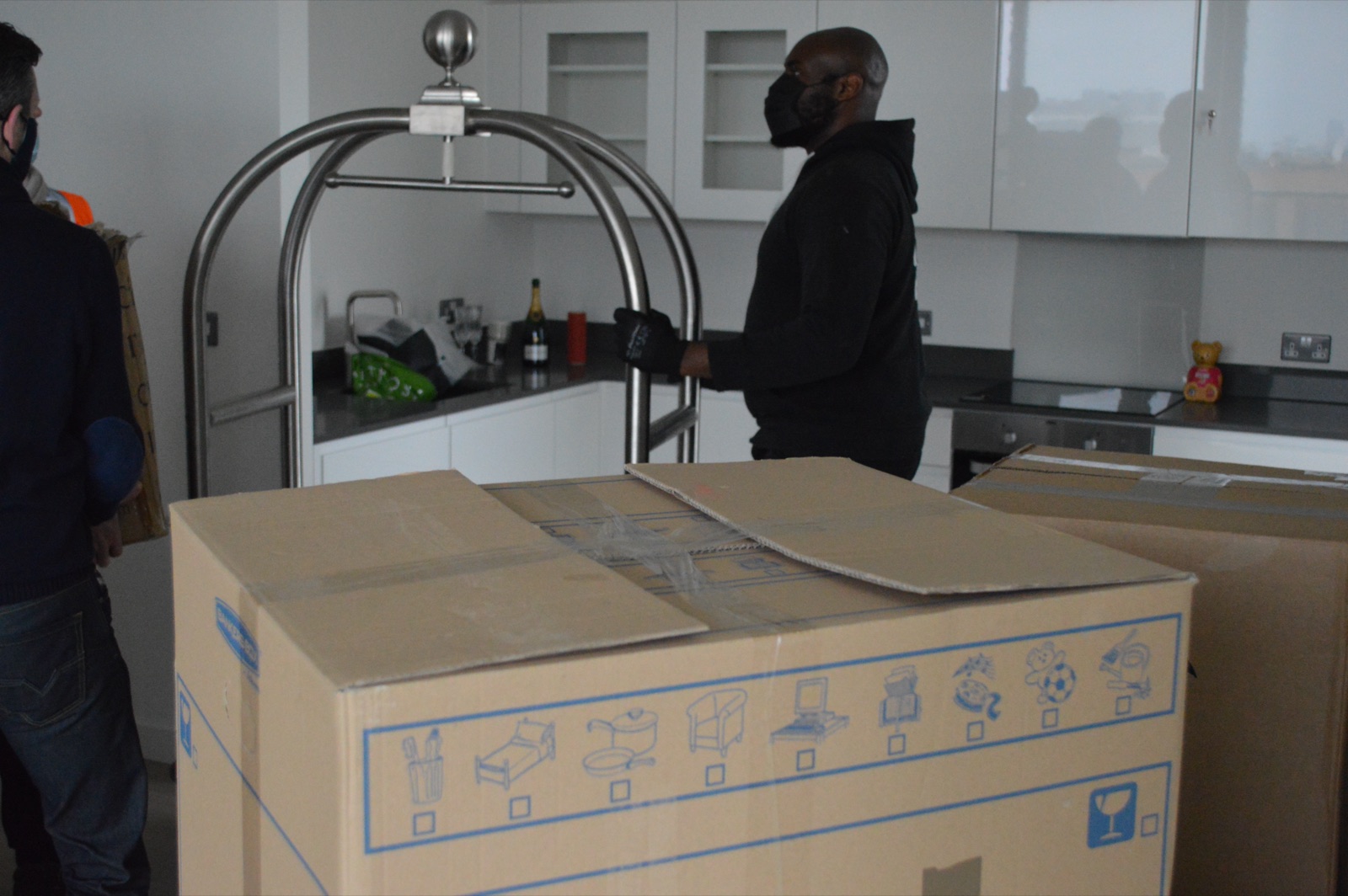
Move the business carefully
Review the London office removals service for scope, access and quote details, then use the quote form to share postcodes, movers, vans, hours, stairs, access and any extra stops for a London or UK business move from London.