A two way storage move plan
Storage unit move inventory and retrieval loading order
Plan the move into storage around the visit that will bring items out again. Number every handling unit, record its condition, map its final zone and give the moving team a clear desired unload sequence.
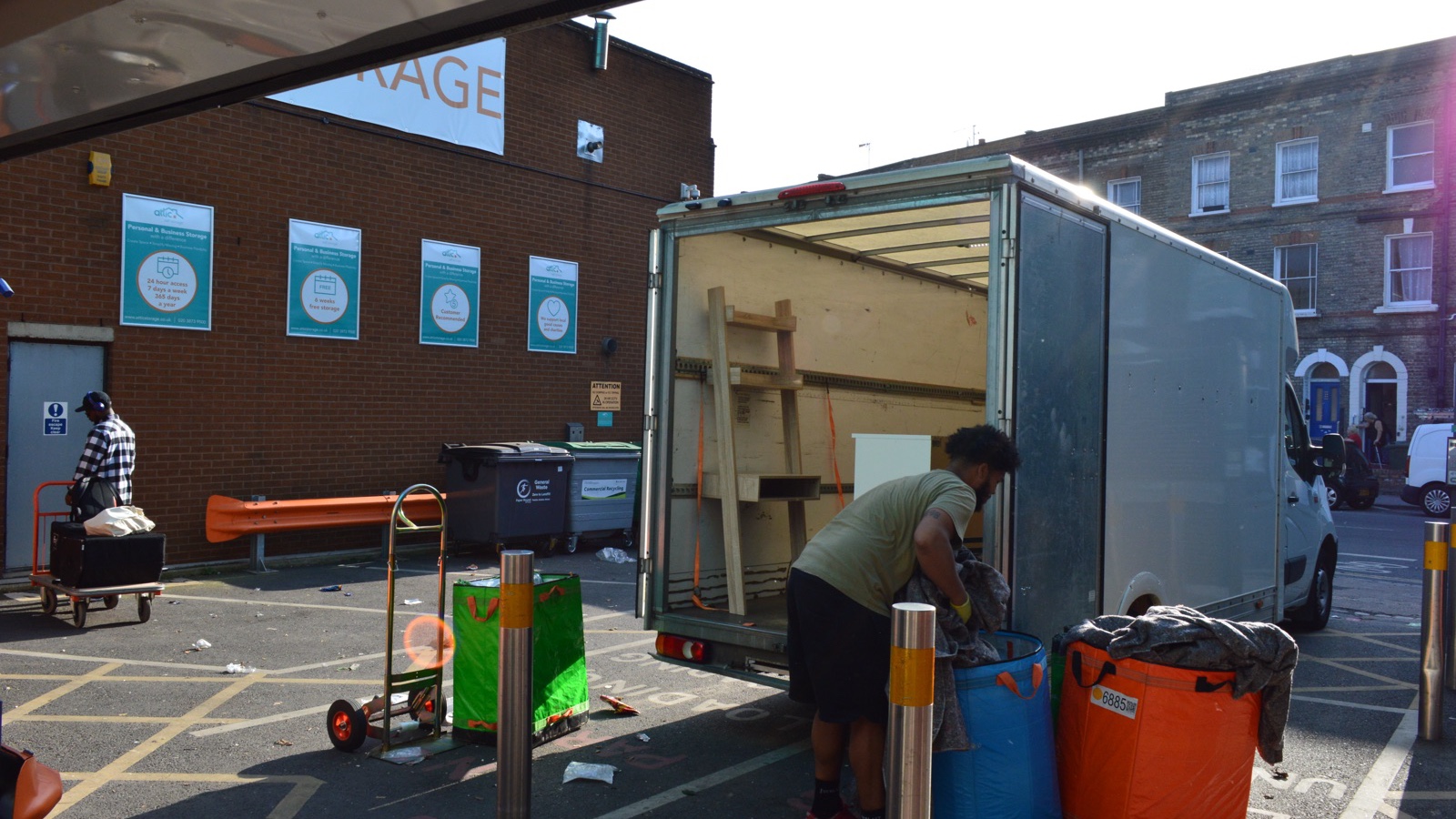
At a glance
What this guide helps you organise
- Define which items may be needed on the next visit before packing or loading begins.
- Give every box, bag and separate item one durable identifier linked to a private inventory.
- Record condition at packing, collection and final placement without treating photographs as proof of cover.
- Map the unit into retrieval zones and keep the desired placement order separate from the vehicle safety plan.
- Finish with a door view photograph, location map, access record and updated item count.
Start at the end
Define the next retrieval before packing begins
The useful question is not only what will fit in storage, but what the next authorised visitor must be able to find without moving unrelated goods.
Write a short retrieval brief before choosing boxes or asking for a vehicle. Record why the goods are entering storage, the earliest likely retrieval date, the groups that may be needed first, the items that should never enter the unit and the person authorised to decide when the plan changes. Use real needs such as tenancy records, work equipment required next month or seasonal furniture. Do not label everything urgent.
Give each item group one retrieval state: next visit, planned later or no expected access before the unit is emptied. This state controls the desired unit zone, not the handling method. A fragile object needed soon cannot simply be left in an unstable position near the door. The storage provider's current agreement, the condition of the unit and the moving team's assessment still control what can be accepted and how it can be placed.
Keep medicines, keys, passports, live financial records, irreplaceable personal documents and anything prohibited by the facility outside the general load unless the responsible people have made a separate suitable arrangement. The 48 hour essentials guide helps separate immediate custody items from boxes that can enter a normal removal load.
The result should be one sentence another person can follow, such as: place archive items first, keep the labelled winter group identifiable, and leave the document crate outside storage. That is a planning instruction, not permission to ignore safe loading or facility rules.
One record per unit
Build a numbered inventory that matches the physical load
A room name alone is too broad for a storage visit, so every sealed container and every unpacked item needs a unique identifier that remains readable after placement.
Number each handling unit, not every object inside it. A sealed box can be ST 001 and a separate chair can be ST 002. Put the identifier on two visible faces and in the private inventory. If a furniture item has approved removable parts, record those parts under the same parent identifier and state which container holds the fixings. Do not expose a valuable or sensitive description on the outside label.
Use the same fields for boxes, bags and furniture so nothing disappears into a miscellaneous line. Record a plain description, container type, external dimensions where useful, source of any known weight, weight concern where the figure is unknown, fragile or orientation notes, current condition reference, planned retrieval state, proposed unit zone and owner. The customer supplies the facts; the removal company decides what further assessment, packaging or handling information is needed.
| Field | Record | Decision it supports |
|---|---|---|
| Identifier | One code on the item and inventory | Count, placement and later retrieval |
| Description | Useful private description without unnecessary personal data | Confirm the correct handling unit |
| Dimensions and weight source | Measured size and documented weight, or unknown | Fit, capacity and assessment questions |
| Condition reference | Dated photograph set and visible exception | Compare the same item at each handover |
| Retrieval state | Next visit, planned later or no expected access | Desired unit zone and placement sequence |
| Restrictions | Orientation, fragility, maker instruction or unresolved question | Keep the item on hold until reviewed |
Reusable worksheet
Download a blank storage inventory CSV
The template uses the same fields as this guide so each box, bag or separate item can keep one identifier, retrieval state and proposed unit zone. Keep the detailed file private and leave out access codes, unnecessary personal data and descriptions that advertise valuable contents.
Use the van size calculator methodology only for guide volume. Its item coefficients do not establish actual weight, vehicle payload, safe fit, unit capacity or a loading method.
Photograph the same evidence
Record condition at each useful handover point
Condition photographs are most useful when the identifier, viewpoint, date and exception note let someone compare the same handling unit before and after movement.
Create a short photograph set before the item is wrapped or the box is sealed. Include the identifier, a full view and close views of visible marks, weak corners, broken fittings or other declared conditions. After packing, photograph the closed container and readable labels. Do not photograph private papers, screen contents, keys, access codes or unnecessary personal information.
At collection, compare the inventory with the physical count and record any changed condition or extra item before it enters the vehicle plan. The Driver and Vehicle Standards Agency says a load plan can include the load position, securing method, unloading instructions, precautions and a dated photograph of the secured load. The moving operator remains responsible for its operational record. A customer photograph should support communication, not direct restraint or replace the operator's checks.
After placement, take a door view, a zone view and exception photographs without climbing on goods or entering an unsafe position. Link the final image references to the same identifiers. A photograph does not prove the cause of damage, acceptance of liability, insurance cover, environmental suitability or that an item can safely remain where it was placed. Read the applicable storage and removal terms for evidence duties, exclusions, declared values and notification times.
For vulnerable furniture and ordinary packing boundaries, use the protected goods removals guide. Keep any item with changed condition or inadequate packaging on hold until the responsible provider reviews it.
Prepare clean, fully dry and breathable goods for storage
A complete inventory cannot resolve moisture or covering choices, so prepare each suitable item for the conditions and rules of the exact booked unit before collection.
Clean furniture and textiles using the method suitable for the material, then allow them to dry fully before collection. Put any damp item or wet packaging on hold; do not seal moisture into the storage load.
For furniture or textiles that need to breathe, use a suitable breathable cover rather than tightly sealing them in plastic. Keep transport-only wrapping separate from the covering intended to remain in storage, and record the agreed method against the item identifier.
Ask the exact storage provider whether the booked unit and agreement require or permit a wall gap, off-floor support, ventilation space or a particular cover. Put any moisture-sensitive, temperature-sensitive, unusually valuable or unresolved item on REVIEW until the customer and provider confirm a suitable arrangement. This check does not guarantee item condition or establish storage or removal insurance.
The unit is another address
Confirm the storage facility route before booking the van
The facility name and unit number do not reveal the vehicle position, access window, lift route, trolley rules or usable opening at the actual unit.
Ask the storage provider for the current procedure that applies to the exact booking. Record the full address, unit number, floor, access hours, identity or authorisation requirement, key or lock arrangement, reception contact, vehicle entrance, approved loading position, height or length restriction, lift availability, trolley procedure and the route from vehicle to unit. Measure the unit doorway and any lift or corridor constraint when a large item depends on it.
Read the actual storage agreement for excluded goods, packaging duties, access controls, insurance or protection requirements, payment dates, notice, shared areas and anything the provider may move, refuse or isolate. Do not transfer a rule from another facility or an old website summary. A marketing statement such as extended access is not enough when the booked site, date or reception process has a specific condition.
HSE guidance for warehousing emphasises clear instructions for visiting drivers, suitable traffic routes and separation between vehicles and pedestrians. The same HSE loading page calls for excluding traffic and people not involved, using firm level ground and planning for safe unloading. The customer should provide the facility facts, while the facility and moving operator remain responsible for the controls within their roles.
If the public road controls the proposed stop, check the separate parking guide for London moving day. Permission to stop on the road does not authorise entry to the storage site, and the storage booking itself does not approve a roadside stop.
Give every item a destination
Map retrieval zones without designing an unsafe stack
A simple unit map turns the inventory into a destination plan, but it must leave stability, load limits and safe access to the responsible people and provider rules.
Draw the unit as viewed from its doorway and label three planning zones. The back zone holds items with no expected access before the unit is emptied. The middle zone holds groups planned for a later visit. The door zone identifies goods that may be needed on the next visit. Add a left and right reference, fixed features and the proposed position of any clear route required by the provider. Use identifiers rather than long descriptions.
This map records the desired destination. It does not authorise a customer to build tall stacks, climb on boxes, block required access, exceed floor or racking limits, lean goods against unsuitable surfaces or place a heavy item on a weak container. HSE's assessment framework covers the handling task, characteristics of the load, workspace conditions and relevant worker capabilities. Its guidance also points to mechanical aids, reduced carrying distances, suitable space, flooring and lighting as possible controls.
Flag every conflict instead of solving it through guesswork. An item may be needed soon but too large for the proposed door zone. A strong container may still have an unknown weight. A provider may require an aisle or forbid contact with a wall. A fragile item may need a different storage arrangement. Mark the item REVIEW and ask the provider or removal company what evidence or change is needed.
Keep one clean map with the inventory and one door view photograph. Do not tape a list of valuable contents to the unit. The private version can describe contents, while the visible version only needs identifiers and zones.

Two linked sequences
Separate the unit placement order from the vehicle load plan
The customer can state which unit zone should be filled first, but the moving operator must decide how that desired unload sequence can work with stability, payload and restraint.
For a simple move into one unit, the desired placement sequence usually starts with the back zone, continues through the middle zone and finishes with the door zone. That keeps items planned for the next visit from being buried behind goods expected to remain. Turn the map into a numbered placement list and show it to the moving team before loading begins.
Do not reverse engineer the van yourself. An item needed first at the facility may appear to belong near the vehicle doors, but size, weight, balance, restraint, crush risk, the vehicle body and other stops can require a different arrangement. DVSA guidance says loads must be stable, distributed with vehicle limits in mind and secured for the journey. Its guidance for vans also says large or heavy items should be secured and smaller items grouped in boxes or containers where possible.
If the route has several collection or delivery stops, identify the stop and unit zone for every item. Removing part of a load can change weight distribution and security, so the operator must review the remaining load between stops. A customer priority cannot override that check. Do not ask for one item to be released from behind or beneath other goods while the operator says the load is unsafe to disturb.
The Luton van size guide helps customers prepare the item list and access details. It does not prescribe where an item sits in the vehicle. Send the desired placement list and let the responsible operator return a workable load and unload plan.
Four moving day gates
Control count, access, loading and placement on the day
A short gate at each transition keeps late additions, missing identifiers and changed facility conditions visible before they become a buried discrepancy.
Gate one, freeze the count. Compare the physical goods with the latest inventory before the vehicle is loaded. Add or remove an item through the record, not by placing an unlisted bag beside the van. Report wet packaging, weak boxes, changed dimensions, unknown heavy contents or anything the storage provider may refuse.
Gate two, confirm the route. Reread the facility access window, unit number, vehicle position, reception instruction and internal route. Keep children, pets and people not involved away from the active loading area. If the lift, trolley, loading bay, door or unit differs from the record, pause the old placement plan and obtain a revised decision.
Gate three, hand over the sequence. Give the operator the item identifiers, stop order, zone map, fragile notes and desired placement sequence. HSE says that where more than one company is involved, arrangements for loading and unloading should be agreed in advance and information about difficult loads should be exchanged. The operator decides the vehicle, people, restraint and handling method.
Gate four, close each zone. Mark an item placed only after its identifier and location have been confirmed. Record exceptions as they happen. Do not force a planned layout when the unit condition, packaging, stability or safe route makes it unsuitable. A clean hold is better than a false inventory that shows an item where it never went.
Make the next visit possible
Close the unit with a retrieval ready handover record
The final record should let an authorised person identify the unit, find the right item group and understand every exception without relying on memory.
Stand in the permitted position at the doorway and compare the finished unit with the map. Confirm the placed count, missing count and items held outside the unit. Photograph the overall door view and each visible zone. Update any identifier whose final location changed. Record who controls the lock or access credential, but keep codes and sensitive identity details in the facility's approved secure route rather than the general moving note.
Save the current inventory, zone map, facility procedure, storage agreement reference, condition photographs, exception log and booking record together. Add a review date before any known retrieval or contract change. The clear booking records guide explains how route, access and payment records should remain distinguishable rather than being mixed into one message.
On a later visit, begin by checking the facility rules and the door view against the current unit. Record which identifiers leave and where any remaining items move. If goods will travel again, give the removal operator an updated inventory and current photographs. Do not assume the original packaging, route, weight distribution or vehicle plan still applies after months in storage or after the unit has been rearranged.
A retrieval record is successful when it exposes the next decision. It cannot guarantee continuous access, item condition, provider acceptance, insurance outcome or that no other authorised person will change the unit.
The practical next step
Send one storage booking brief for review
A useful enquiry combines the real route, item inventory and desired placement sequence while keeping the storage contract and vehicle safety decisions with the responsible parties.
Give Men With Van the collection address, storage facility address, unit number, floor, loading position, access window, lift or trolley route, item identifiers, dimensions for large goods, known weight sources, condition concerns, packing needs, extra stops and the desired unit placement sequence. State which items remain outside storage and name one moving contact who can approve ordinary booking changes.
For a flexible Man and Van London storage run, include every stop in travel order and make the facility access record as complete as a home address. For a wider House Removals London plan, keep the storage inventory as its own destination group so goods for the new home and goods for the unit do not share a vague label.
If packing support is requested, use the packing and moving service page to describe what should be packed by the team and allow enough booked time. Men With Van moves goods to and from storage within the accepted removal scope. The customer remains responsible for choosing the storage provider, reading its agreement, arranging lawful access and confirming that the unit and permitted contents suit their needs.
Storage booking brief checklist
- Every address and stop is in travel order.
- The facility procedure and access window are current.
- Each handling unit has one identifier and retrieval state.
- Large, fragile, heavy or unresolved items are clearly flagged.
- The zone map and desired placement sequence are attached.
- Items outside storage and open questions are recorded.
The next step is to send the brief for review before choosing the final van count, movers, booked hours and date.
Sources and checks
Current handling, loading and storage workplace sources
Safety guidance and facility procedures can change. Check the current HSE and DVSA pages, then read the agreement and access rules for the exact storage provider and unit before moving day.
- HSE: warehousing and storage guidanceChecked 21 August 2026
- HSE: loading and unloading guidanceChecked 21 August 2026
- HSE: assessing manual handling that cannot be avoidedChecked 21 August 2026
- HSE: reducing manual handling riskChecked 21 August 2026
- GOV.UK and DVSA: responsibility for load securityChecked 21 August 2026
- GOV.UK and DVSA: load securing basicsChecked 21 August 2026
- GOV.UK and DVSA: securing loads in vansChecked 21 August 2026
Common questions
Questions about storage inventory and retrieval order
What should be kept near the front of a storage unit?
Keep only genuinely planned retrieval groups in the proposed door zone, subject to the provider's rules and a safe stable placement. Use identifiers and a private map so the group can be found. Do not place a fragile, heavy or unsuitable item near the front merely because it may be needed soon.
Should heavy boxes always go at the bottom?
Do not turn one general rule into a stacking instruction for an unassessed unit. Weight, container strength, stability, floor or racking limits, access and retrieval all matter. Mark known weights and concerns, then let the storage provider and moving team apply the suitable method within their responsibilities.
Do condition photographs prove that removal or storage insurance applies?
No. Photographs can help identify an item and compare visible condition, but they do not establish cause, liability, value or cover. Read the applicable removal and storage terms, declare items as required and follow the evidence and notification process for the actual agreement.
How can boxes be labelled without advertising valuable contents?
Put a neutral identifier and destination zone on the physical box, then keep the detailed description in a private inventory shared only with authorised people. Avoid names, account details, access codes and exact valuable contents on a label visible in a shared facility.
Can Men With Van move belongings directly into a storage unit?
Storage moves can be quoted when the full route, inventory, access window, unit details, floor, lift or trolley route and any special item concerns are supplied. The storage provider controls facility access and permitted contents, while Men With Van must accept the removal scope and operating plan.
Plan the way back out
Send the numbered inventory and unit map before booking.
Give Men With Van every address, the storage facility procedure, item identifiers, large item details, current photographs, unit zones, desired placement order and open questions so the real move can be reviewed.