A separate journey for every pet
Moving with pets across London: control the travel day handover
Treat the pet journey as its own custody chain. One named person keeps the pet, travel restraint, records and welfare kit separate from the removal load until a checked destination room is ready.
At a glance
What this guide helps you organise
- Give each pet to one named custodian and keep that responsibility separate from the inventory and moving crew.
- Choose the carrier, restraint and route before moving day, with a realistic fallback if keys or transport are delayed.
- Pause the carrying route before the pet leaves its secure origin space or enters the destination.
- Check doors, windows, food, water and familiar items before declaring the destination room ready.
- Update identification and contact records, but do not rely on an unconfirmed database change as the only control.
One custody chain
Separate the pet journey from the removal load
A pet is not another line on the inventory, and the person directing the crew should not quietly become responsible for an animal as well.
Create a separate journey record for each pet before moving day. It should name the current custodian, the travel method, the restraint or carrier, the departure trigger, the destination room and a fallback location. The removal record still covers the addresses, inventory, access, parking, lifts, dismantling and room order. Keeping these records separate makes it clear which person has the pet at every point.
Men With Van's current moving questions list animals among the things that stay outside the move unless there has been a specific agreement. Plan on the safer default: the pet travels separately with its custodian and does not enter the removal load. A service agreement about household goods must never be treated as permission to carry a passenger or an animal.
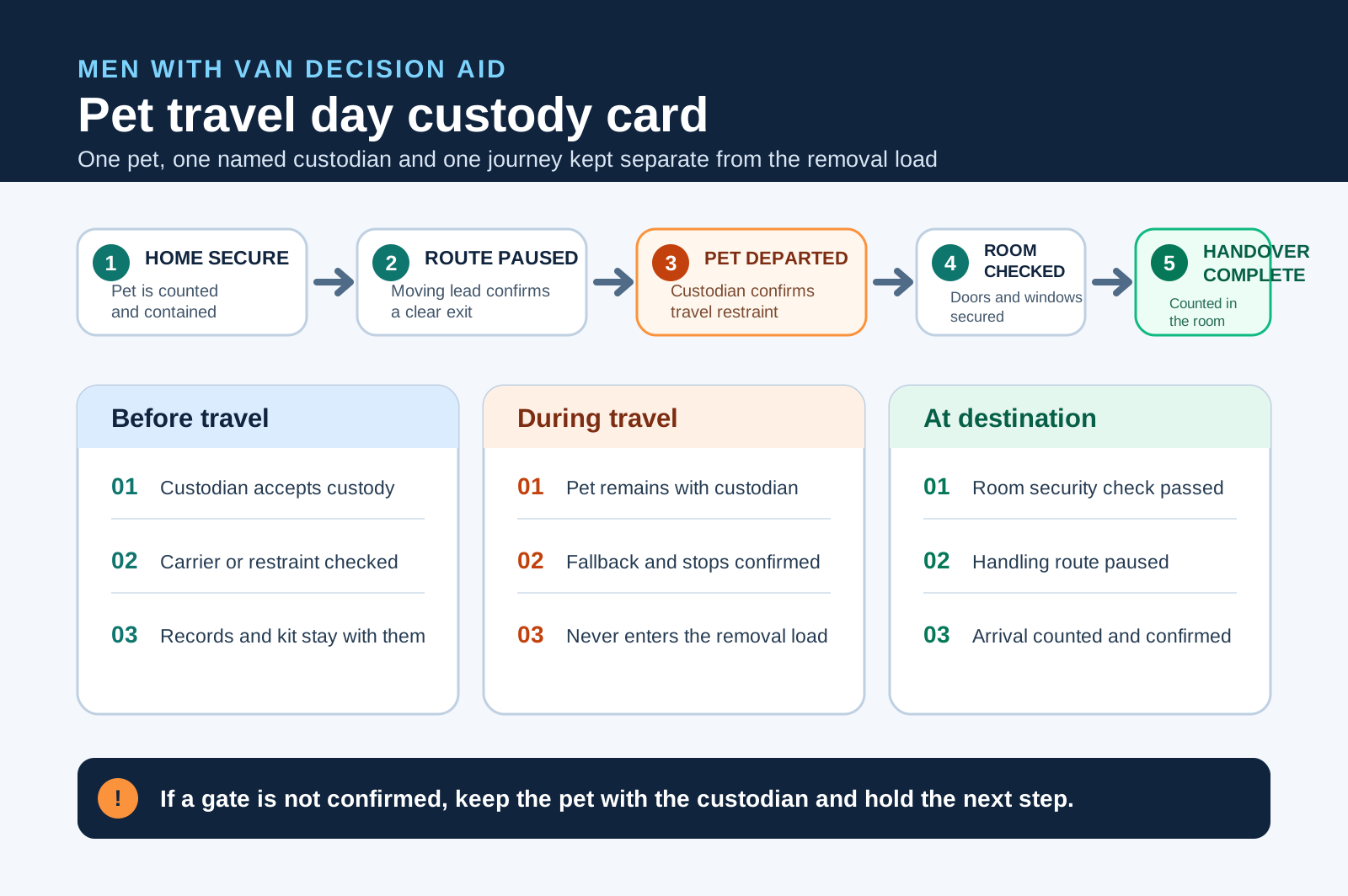
Choose one moving contact for the crew and one pet custodian. They can be different people, which often reduces divided attention. If the custodian must also manage children, keys or another pet, write down a realistic fallback rather than assuming the roles will fit together. The result is a simple custody chain: secure at origin, route paused, pet departed, destination room checked, handover complete.
| Record | What it controls | Named owner |
|---|---|---|
| Removal record | Goods, access, rooms, timing and crew instructions | Moving contact |
| Pet journey record | Custody, restraint, route, welfare and destination room | Pet custodian |
Private practical details
Build one travel day custody card for each pet
The useful record is short enough to check under pressure but precise enough that a fallback custodian can follow it without guessing.
Put the pet's name, species, usual carer, current location and destination room at the top. Add the custodian's mobile number, the normal veterinary practice, an emergency veterinary option, the microchip database if known, and any medication or feeding instructions already set by the owner or vet. Keep personal telephone numbers and medical details in a private note, not on a box label or a public message.
Record the exact carrier or restraint and where it will stay before departure. Add a route, an intended departure window and a fallback if the destination is not ready. The fallback might be remaining with the custodian at the origin, staying with a trusted carer, or using a suitable service arranged directly by the owner. Check availability and conditions in advance rather than inventing a plan on the pavement.
The separate 48 hour moving essentials kit helps control keys, medicines and personal bags. For a pet, add water, food where appropriate, bowls, waste bags or litter supplies, cleaning materials, familiar bedding, any prescribed medicine and the current record. Keep the whole kit with the custodian. Nothing essential for the pet should disappear inside a sealed box or the removal vehicle.
| Before travel | During travel | At destination |
|---|---|---|
| Named custodian and fallback | Restraint, route and stops | Checked room and named checker |
| Carrier location and welfare kit | Vet contact and current needs | Arrival count and handover time |
| Departure trigger | Destination delay fallback | Record and identification actions |
Gate one and two
Secure the origin before the carrying route opens
The origin plan must prevent an outside door, internal door or carrier from being opened as an accidental part of loading work.
Choose a quiet room that can stay outside the crew's carrying route. Check the door, windows and any other exit before work starts. Place a clear instruction on the closed door and tell the moving lead which room is excluded. The sign is only a reminder. A named custodian, a closed boundary and an agreed pause are the controls.
Keep the pet contained in a way suited to that individual animal and current professional advice. Blue Cross advises using a robust carrier for cats and keeping dogs securely restrained for travel. The RSPCA also recommends a robust carrier with enough space and ventilation for animals that travel in one. Owners should ask their vet about individual health, travel anxiety or medication questions rather than using general internet advice as a prescription.
Do not release the pet because the vehicle looks almost loaded. First, the custodian counts and confirms the pet, checks the carrier or restraint, takes the welfare kit and accepts custody. Second, the moving contact pauses movement through the chosen exit. Only then does the custodian take the pet to the separate vehicle or transport route. Loading can resume after the exit is secure and the custodian confirms departure.
If the room cannot be protected from the carrying route, use the planned fallback. Trying to supervise a loose animal while also holding a door, moving a box or directing a crew is not a valid substitute for a secure space.
Travel mode decision
Choose a London travel method before keys move
Private vehicles, taxis, public transport and trusted carers all create different custody and access questions, so the route needs its own decision.
For a private car, decide who drives, who monitors the pet if another person is needed, where the restraint will be fixed and how ventilation and stops will be managed. The current Highway Code says animals in a vehicle should be suitably restrained so they cannot distract the driver or cause injury if the vehicle stops quickly. It gives examples such as a seat belt harness, pet carrier, dog cage or dog guard. Select equipment that suits the real animal and follow its instructions.
For a taxi or private hire vehicle, ask the operator before booking whether the animal, carrier and route are accepted. State the animal type and size, and do not assume an ordinary passenger booking settles the question. For a trusted carer or boarding arrangement, record the handover, collection authority, timing and destination fallback.
Current Transport for London conditions allow assistance dogs and other inoffensive animals unless there is a good reason to refuse them. Other animals must be on a lead or in a suitable container, must not occupy a seat, and remain the customer's responsibility. TfL also directs customers with animals towards wide gates and says animals should be carried on moving escalators unless an assistance dog has been trained to use them. Conditions, staff decisions and the pet's welfare still matter, so confirm the current route and avoid the busiest possible transfer if it is unsuitable.
| Method | Confirm before moving day | Fallback trigger |
|---|---|---|
| Private vehicle | Driver, restraint, ventilation, stops and parking | Vehicle or restraint unavailable |
| Taxi or private hire | Operator acceptance, carrier, collection point and space | Booking does not explicitly accept the pet |
| Public transport | Current conditions, route, access, carrier and crowd level | Route disruption or unsuitable conditions |
| Trusted carer | Authority, handover, collection time and contact details | Destination room or keys are delayed |
Gate three
Check the restraint, carrier and welfare kit together
A carrier in one vehicle and the medicine or water in another is not a complete travel plan, even when every item exists somewhere.
Put the restraint or carrier, welfare kit and current custody card beside the pet before departure. Inspect catches, attachment points and condition using the maker's instructions. Add familiar bedding or scent where suitable, without blocking ventilation. Keep food, water, prescribed medicine and cleaning supplies accessible to the custodian rather than packed with household goods.
Blue Cross advises that cats and dogs should not travel in the boot, front footwell or removal van, and recommends securing them in the car. Its guidance also covers ventilation, water and planned breaks. The RSPCA recommends planning the journey, checking that the animal is fit to travel and taking the most direct suitable route. These are general welfare principles, not a claim that one setup fits every cat, dog, bird or small animal.
Discuss sedation, travel sickness and health concerns with the animal's vet. Do not give an unprescribed product or change medication because moving day is busy. If the pet is unwell, the carrier is damaged, the agreed driver is unavailable or the route is no longer suitable, stop at this gate. The removal can continue only if the pet remains safely with the custodian and the written fallback is genuinely available.
A clear moving record can show the crew when the pet route must be paused. It should not expose medical details or transfer responsibility. The custodian retains the pet kit and makes animal welfare decisions.
Gate four and five
Check the destination room before the pet arrives
Keys arriving is not the same as a room being ready, especially when doors, windows and carrying routes are still changing.
Name a destination checker who is not travelling with the pet if possible. That person confirms lawful entry, closes doors and windows, checks any other escape route, removes obvious hazards and makes sure the room will stay outside the active carrying route. They place water, food where appropriate, bedding, litter or other familiar essentials without creating an obstruction.
The checker then tells the moving contact that the room is ready. The moving contact pauses the relevant entrance and corridor before the custodian enters. The custodian carries the pet directly into the room, closes the boundary and confirms the pet is present before anyone restarts movement nearby. Only the custodian should mark the handover complete.
Use the decision aid below as a five gate check, not as a timetable. A late key, open window, missing carrier or occupied room means the next gate stays closed. If access is delayed, use the same fallback thinking as the completion day delay plan: keep custody clear, avoid speculative unloading and make the next decision from confirmed access rather than an expected time.
Where loading and pet arrival must share an entrance, agree a short full pause. A verbal warning while people continue carrying furniture is not equivalent to a protected route.
Records after the address change
Update identification without relying on one database
An address change can affect several records, and submitting an update does not prove that every organisation has accepted it.
List the records that apply to the individual pet. They may include a microchip database, collar tag, veterinary practice, insurer, pet sitter, licensing record or recovery service. Record the date submitted and the confirmation received. Keep the current mobile number available throughout the move, because it may be more useful on the day than an address still being processed.
GOV.UK says dog and cat owners must keep microchip database details up to date when they move house or change phone number. Its current guidance also says dogs in public places must wear a collar and tag showing the owner's name and address, subject to stated exceptions. Check the official page for the animal and circumstances rather than assuming the same legal detail applies to every species.
Do not publish a microchip number, full address or private veterinary information on an outside crate, public post or shared crew message. The custody card can identify which database or record requires action while the sensitive details remain in the owner's secure record.
If the new address is temporary, ask each organisation how it records correspondence and keeper contact. Keep evidence of the change, but treat an acknowledgement as administrative evidence only. It does not replace a secure carrier, a named custodian or a checked room.
After the handover
Let the pet settle at its own safe pace
The arrival count closes the travel handover, but it does not mean the whole home is immediately suitable for free access.
Keep the pet in the checked space while entrances, windows, unpacking and furniture movement are still changing. Give the animal familiar items and access to its normal essentials as appropriate. Watch the individual animal and use veterinary advice when behaviour, appetite, breathing, toileting or other health signs cause concern.
For cats, current RSPCA guidance recommends keeping them indoors for two to three weeks after a move so they can adjust to the new environment. Blue Cross also advises a settling period and careful early access. The right plan depends on the individual cat, the home, prior indoor habits and professional advice. Check windows, cat flaps and garden boundaries before any release, and update identification first.
Dogs should remain under a responsible person's control, with a lead or other suitable restraint for early outings as appropriate. Birds, rabbits and other small animals need species appropriate enclosure, temperature, ventilation and routine decisions that are beyond a general removal guide. Use current specialist or veterinary guidance for them.
Ask the moving contact to keep the protected room outside the handling route until the custodian explicitly releases it. If the room later needs furniture, agree another pause and move the pet to a second checked space first. The same custody principle applies: confirm the next safe place before opening the current one.
Sources and checks
Current pet welfare, road and London transport sources
Rules and animal welfare guidance can change, and individual needs differ. Check the current source, equipment instructions and veterinary advice for the real pet and journey.
- Blue Cross: moving house and travelling with catsChecked 2 August 2026
- Blue Cross: moving house and travelling with dogsChecked 2 August 2026
- GOV.UK: get your dog or cat microchippedChecked 2 August 2026
- GOV.UK Highway Code: rules about animalsChecked 2 August 2026
- RSPCA: taking your pet on holiday and pet travelChecked 2 August 2026
- RSPCA: creating the ideal home for your catChecked 2 August 2026
- Transport for London: conditions of carriageChecked 2 August 2026
Common questions
Questions about moving with pets across London
Can my pet travel in the Men With Van removal vehicle?
Plan for the pet to travel separately with its named custodian. Men With Van's current FAQ lists animals among the things kept outside the move without a specific agreement, and no household goods booking should be treated as passenger or animal transport permission.
What should I do if there is no secure room at the new address?
Keep the pet with the custodian and use the planned fallback, such as remaining at the origin or with a suitable trusted carer. Do not start the destination handover until a checked space and protected route are confirmed.
When should I update my pet's microchip details?
Update the relevant database when your address or phone details change and retain the confirmation. GOV.UK says dog and cat keeper details must be kept current, but a submitted update should not replace the physical travel and room controls.
Can I take a pet on London public transport during the move?
TfL's current conditions permit assistance dogs and other inoffensive animals unless there is a good reason to refuse them, with other animals on a lead or in a suitable container. Check the current route, access and conditions before relying on it.
Should I sedate a pet for moving day?
Do not improvise medication or sedation from general advice. Discuss anxiety, sickness, fitness to travel and any medicine with the animal's vet in enough time to follow an individual plan safely.
How soon can a cat go outside after moving?
Current RSPCA guidance recommends keeping a cat indoors for two to three weeks after a move so it can adjust. Individual cats and homes differ, so check identification, boundaries and veterinary advice before first access.
Keep the pet journey separate
Share the moving route while the owner controls every pet handover.
Give Men With Van the addresses, inventory, access, parking, room order, excluded pet room and one moving contact. Keep the pet's custody, restraint, travel, records and welfare decisions with the appropriate owner or carer.