Stair route planning
How to plan a fourth floor flat move without a lift
A floor number alone does not show the work involved. Record every flight, landing, turn and item, then give the removal company enough evidence to assess the route, team, work pattern and booked time before moving day.
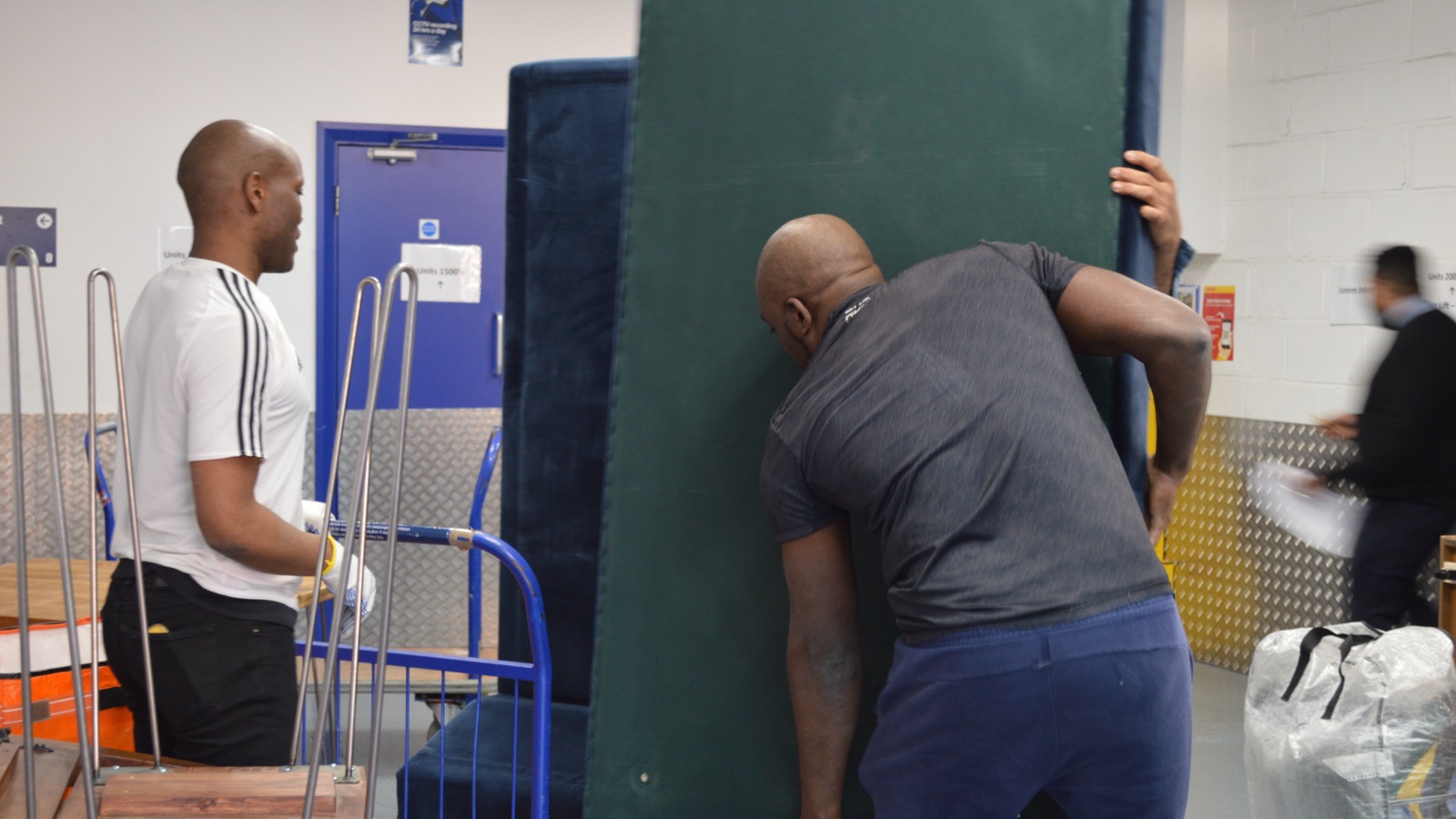
At a glance
What this guide helps you organise
- Count the actual flights, half landings and turns from the building entrance to the flat door instead of relying on the floor label.
- List every box, bag, appliance and piece of furniture in the form in which it will travel, with dimensions and known weight information where available.
- Record the complete route from the vehicle position to the destination room, including doors, surfaces, lighting, shared areas and the tightest point.
- Let the removal company assess the handling method, crew and recovery pattern. There is no universal safe weight, team formula or break timetable.
- Pause and revise the plan when an item will not fit, essential evidence is missing, the communal route cannot stay clear or conditions change.
Start with evidence
Define the real stair route before discussing time or team size
The phrase fourth floor can hide different layouts, so replace the label with a route that another person can understand without visiting the property.
Begin at the place where the removal vehicle can lawfully stop. Record the walking distance to the entrance, every controlled door, the number of full flights, any half landings, the direction of each turn and the final route into the flat. State clearly whether there is no lift, the lift is out of service, or the building does not permit removals to use it. Those are different facts and they can produce different plans.
Do not assume that a building described as fourth floor has the same vertical route as another building. Some entrances start above street level. Some staircases divide each storey into two flights. A short video from entrance to flat door can help, provided it does not expose neighbours, access codes, private documents or other sensitive details. Add still photographs of the tightest turns and doors.
This route record begins after the customer has confirmed that the communal stairs may be used for the move. If lift approval is still uncertain, use the service lift booking guide first. The new record should answer one practical question: what repeated carrying route will the removal team actually face?
Inventory the work
Build an item register in the form each load will travel
A room count or a few photographs cannot show the repeated stair work as clearly as an item register that separates boxes, bags, furniture, appliances and dismantled parts.
List each large item separately and group only genuinely similar smaller loads. For every entry, record the item name, quantity, packed or dismantled form, longest dimensions, fragility, useful grip information and weight only where it is known from a label, manual or reliable record. Do not guess a weight and do not describe an item as safe for one or two people. HSE guidance does not set a universal safe lifting weight, and team handling still needs assessment.
Boxes need more detail than miscellaneous. Separate books, kitchenware, linen and light bulky contents so the mover can see where a smaller load or different container may be needed. HSE advises considering smaller, lighter loads that are easier to grasp when manual handling cannot be avoided. That principle supports sensible packing, but the operating team still decides how each item is handled.
For furniture, state whether legs, shelves, doors or another approved part can be removed, and whether the item is fragile, weak, unusually heavy or difficult to grip. Link the full inventory to the Men With Van item list builder for volume planning, while keeping the stair register as a separate record of carrying demand.
Inspect each segment
Record the working conditions along every flight and landing
The same box can present a different task when the route is narrow, poorly lit, slippery, obstructed or shaped so that the carrier cannot see the next step.
Walk the empty route and note clear width, ceiling or beam height, landing depth, handrails, door swings, changes of level, loose coverings, damaged treads, wet areas, poor light and anything that reduces visibility. Record where the route narrows and where a large item would need a separate fit review. The customer is collecting evidence, not declaring the route safe.
HSE expects an employer's assessment to consider what the job involves, the load, the surroundings and the capability of the people doing the work. Its carrying guidance treats floors, carry distance, obstacles, stairs, grip and restricted posture as relevant factors. This is why a general description such as normal stairs is not enough for a quote. A clear route record lets the removal company identify which parts need a closer assessment or a different plan.
Keep the shared staircase and corridor usable. Government fire guidance for high level homes says corridors and stairways should be kept clear. Do not create a temporary box store on a landing or hold furniture where it blocks an escape route. Agree any lawful staging position with the building and keep it outside the active communal route.
Make the decision visible
Turn inventory and route evidence into a stair demand register
One table can show which items have enough evidence for assessment, which need mover review and which make the current route unworkable.
Use one row for each large item and each group of similar boxes. The decision column is not a customer safety approval. It is a readiness status that tells the removal company where evidence or planning is still needed.
| Record | What to add | Readiness status |
|---|---|---|
| Item | Name, quantity, packed form, dimensions and known weight source | Ready for mover assessment |
| Handling question | Awkward grip, fragility, dismantling question or uncertain construction | Needs mover review |
| Route match | Tightest door, turn, landing or overhead constraint | Evidence missing or fit review needed |
| Current blocker | Item does not fit, route is obstructed, light has failed or building use is not approved | Pause and revise the plan |
Attach the photographs or short route clip by row reference so nobody has to guess which wardrobe or turn is being discussed. The prepared movers guide covers the broader booking details. This register goes deeper on repeated stair work without becoming a set of lifting instructions.
Different decisions
Separate item fit, handling and protection decisions
An item fitting through the stairwell does not establish how it should be handled, how many people are needed or what protection is suitable.
Flag any sofa, wardrobe, appliance, table, glass panel or long component that comes close to the route dimensions. Record its assembled and approved dismantled form where known, then ask for a specific review. Do not force an item around a turn, lower it from a window, improvise with rope or assume that removing one part makes the remaining structure sound.
Protection is another separate decision. The route record should show walls, rails, corners and finished floors that may need a planned control, while the item register should identify fragile surfaces, loose parts and weak construction. The protected goods guide explains the existing Men With Van approach to item condition, wrapping, dismantling and loading order. The stair article only records what the team needs to assess.
Some items may require a specialist service, different equipment or a route that is not available. The useful outcome is an early hold, not a promise that every item can be taken up or down the stairs. If the team cannot confirm a suitable system from the evidence supplied, arrange a closer review before fixing the move plan.
No fixed formula
Let the mover assess crew, repetition and recovery together
Crew size and break planning depend on the hardest tasks and the full pattern of work, not simply the flat floor or the number of boxes.
HSE assessment factors include load, posture, carrying distance, frequency, environment and individual capability. A fourth floor route adds repeated work, but it does not create one reliable formula for people or minutes. A narrow landing can also limit how many people can position themselves around an item, so adding more carriers is not automatically the answer.
Team handled items need communication, coordination, clear footing and one agreed lead for the operation. The removal company should choose the system after reviewing the item and route. Customers can help by providing complete evidence and keeping the planned route available, but should not prescribe an improvised method.
Recovery should also follow the real workload. HSE guidance discusses excessive work rates, tight deadlines, fatigue and the need for adequate rest or recovery, which may include a different task using different muscles. It does not supply one mandatory break timetable for every removal. Heavy breathing, sweating, a report of excessive fatigue, declining grip or loss of coordination are reasons for the team to pause and review the work, not reasons to wait for a clock.
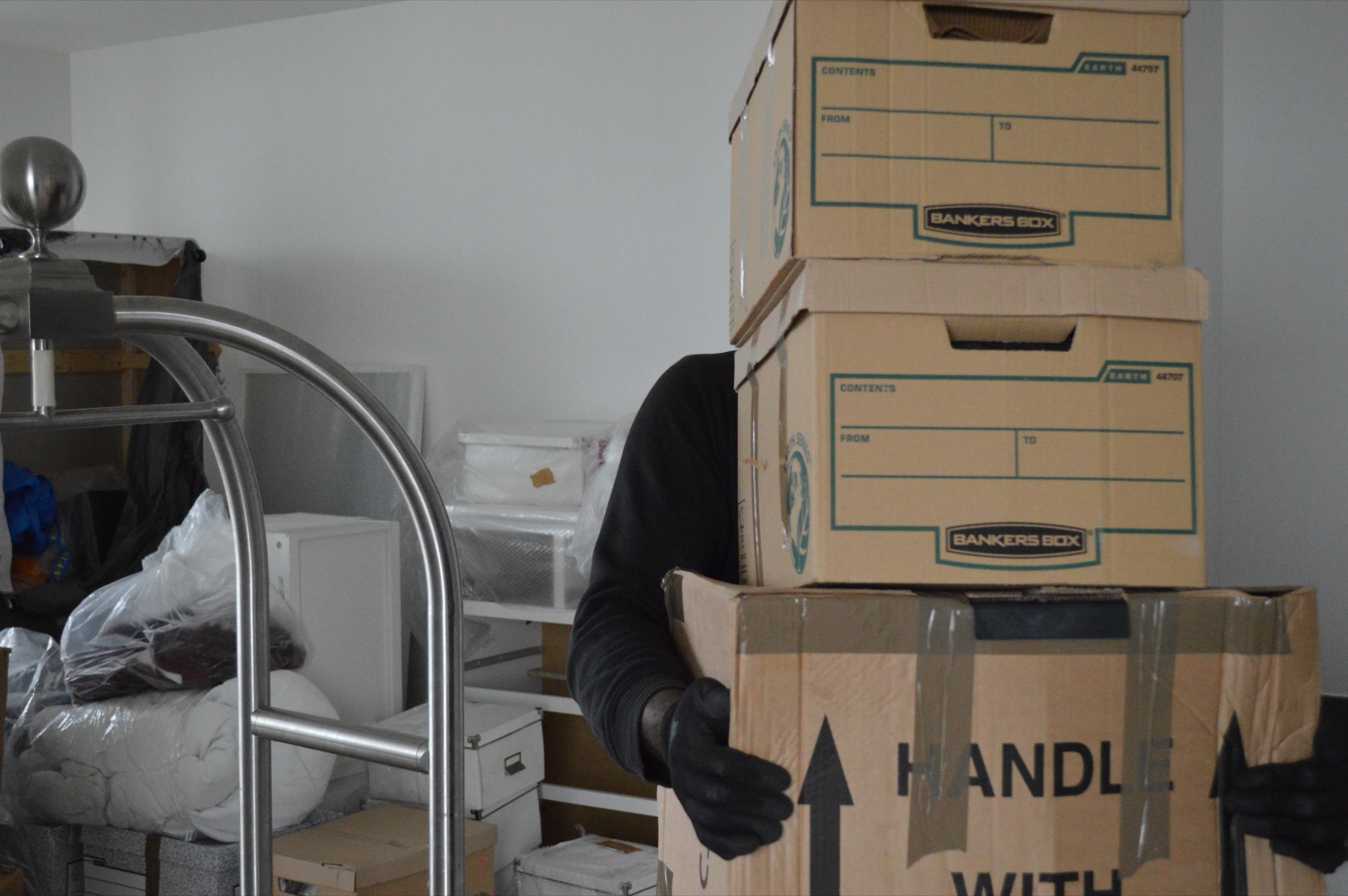
Control the route
Plan the movement flow without turning landings into storage
A useful sequence keeps the staircase clear, gives each item a destination and prevents people moving in opposite directions through a restricted section.
Give every box and dismantled part a destination room label before the team arrives. Identify a suitable preparation area inside the flat and a separate loading area near the vehicle, subject to building and road rules. Do not prefill the stairs or landings. The operating team can then decide the direction, spacing, call system and order for the actual conditions.
Match the inside route to the outside access. If the van is farther from the entrance than expected, the carrying task has changed. The dedicated London parking article for moving day explains how to arrange lawful vehicle access. Put the confirmed distance into the stair handover. Private building permission does not override a council or TfL restriction.
Keep keys, fobs and door contacts with one named person so an access door is not unexpectedly locked while an item is moving. Keep children, pets and visitors away from the working route. If residents need to pass, the team should stop in a suitable position and reopen the route rather than asking someone to squeeze around a load.
Before the quote
Send one stair only handover before the booking is fixed
The final handover should let the removal company compare the item list with the route, identify missing evidence and quote the actual move rather than a floor label.
Combine the full addresses, vehicle distance, building contact, access permission, flight and landing record, route photographs, item register, fit questions, destination rooms and any packing or dismantling request. Add the same information for the delivery address, even when it is at ground level. One easy end does not remove the work at the other.
The flat removals service page explains the broader service for studios, apartments and student rooms. For a fourth floor stair route, ask the team to confirm what further review is needed before vans, movers, booked hours and date are finalised. Stairs and access can affect moving service prices, but there is no honest universal stair surcharge or duration that applies to every item list and building.
Handover check before sending
- The actual flights and landings are counted.
- The vehicle to entrance distance is confirmed.
- Every large item has dimensions and a current photograph.
- Known weight information names its source rather than using a guess.
- Fit, dismantling, fragility and specialist questions are flagged.
- The communal route can remain clear.
- Both addresses have their own route record.
Change control
Reassess when the move day evidence no longer matches
A good plan includes a stop point because a different load, route or working condition can invalidate the assumptions used for the quote and handling plan.
Compare the live job with the handover before carrying begins. Look for extra items, overfilled or damaged boxes, furniture still assembled, a failed light, wet or damaged stairs, a locked door, an occupied landing, a longer vehicle distance or a change in building permission. Tell the team about any difference instead of hiding it to protect the schedule.
If a critical detail has changed, pause that part of the work and let the removal company reassess. The response might be different packing, a dismantling review, a route change, more time, a different team plan or a separate specialist decision. It should not be an improvised attempt to force the original plan through conditions it did not cover.
After delivery, remove packing waste from the route and confirm that shared doors and corridors are clear. Keep the final inventory and any condition photographs with the booking record. Send the stair handover through the quote process early enough to deal with missing evidence before moving day.
Sources and checks
Official guidance used for this article
Rules, application times and charges can change. Check the road signs and the responsible authority again before moving day.
- HSE: assess manual handling you cannot avoidChecked 27 July 2026
- HSE: reduce the risk of manual handling injuryChecked 27 July 2026
- HSE: good handling techniqueChecked 27 July 2026
- HSE: simple manual handling risk filtersChecked 27 July 2026
- HSE: control measures for carrying tasksChecked 27 July 2026
- HSE: control measures for team handling tasksChecked 27 July 2026
- HSE: Manual Handling Operations Regulations guidanceChecked 27 July 2026
- GOV.UK: fire safety in the homeChecked 27 July 2026
Common questions
Fourth floor stair move planning questions
Can Men With Van move a fourth floor flat without a lift?
A stair only flat move can be considered when the full item list, actual flights, route conditions, parking distance and building access are supplied. The team must assess the real job before confirming the plan.
How many movers are needed for a fourth floor flat?
There is no reliable floor based formula. The removal company needs to consider the loads, repetition, route width, turns, grip, environment and individual capability before deciding the team and work system.
What is a safe box weight for carrying on stairs?
UK manual handling law does not set one safe weight. Record known weight information, avoid overfilled or unstable boxes and let the removal company assess each load with the full route and frequency of carrying.
How often should movers rest during a stair only move?
There is no universal break timetable. Recovery should reflect the workload, people and conditions, with the team able to pause or change tasks when fatigue or control becomes a concern.
Will stairs automatically add a fixed charge to the quote?
No universal stair charge is stated here. Stairs, carrying distance, item list, movers and booked time are inputs to the real quote, so provide accurate access details before booking.
What if an item or the route changes on moving day?
Tell the team before that item is moved. A changed load, blocked landing, failed light, wet surface, locked door or longer carry can require the handling plan and quote details to be reviewed.
Send the stair evidence
Share the item register and full route before booking.
Include every flight, landing, turn, door, surface, vehicle distance, large item, known weight source, fit question and current building rule so the team can assess the real move.